

CYA is a popular texting slang used in chats and social media. Most people use it as a short way to say “See You.” It is simple, friendly, and very common in online conversations. In 2026, many teens and internet users will still use CYA in daily texting.
You can see CYA on WhatsApp, Snapchat, Instagram, and gaming chats. People often use it when ending a conversation quickly. It helps make messages short and casual. In this guide, you will learn the real meaning of CYA, smart uses, and the best replies you can send.
What Does CYA Mean in Text?
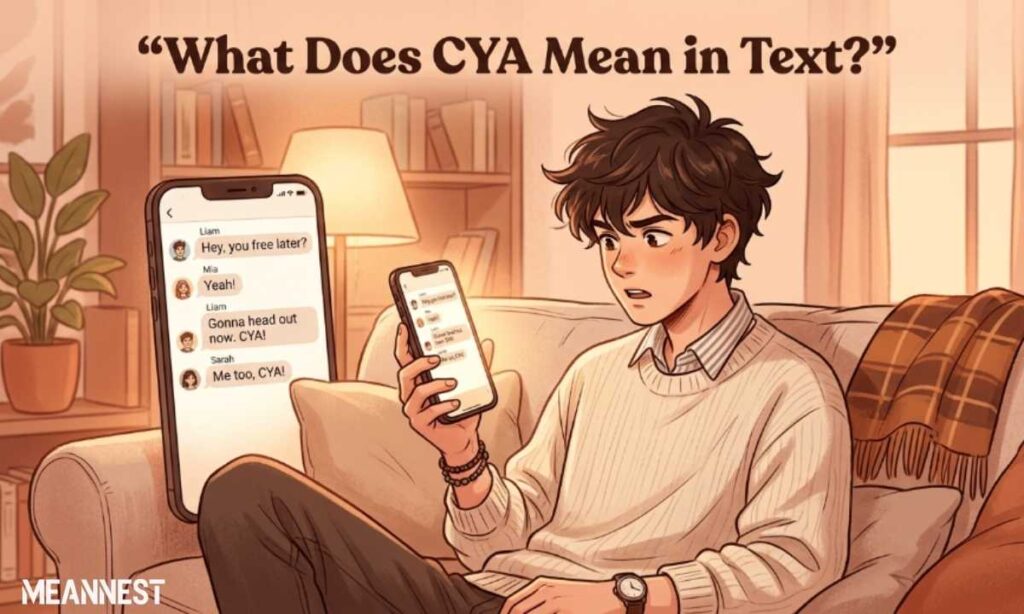
CYA is a widely used abbreviation in digital communication that can carry different meanings depending on who is using it and in what situation.
| Meaning | Context | Tone | Example |
| Cover Your Ass | Workplace or legal situations where someone protects themselves from blame | Serious, cautious | “Send that email so you have proof — classic CYA move.” |
| See Ya | Casual texting or chatting between friends | Friendly, informal | “Gotta run, CYA tomorrow!” |
| Cover Your Assets | Professional or business settings, a polished version of the first meaning | Formal, strategic | “Always document decisions — it’s good CYA practice.” |
| Check Your Attitude | Social media or heated conversations | Sarcastic, confrontational | “Seriously though, CYA before you reply like that.” |
In the workplace, CYA is most commonly used to describe the act of documenting decisions, emails, or actions to protect oneself from future blame.
It reflects a culture where people are mindful of accountability, and using phrases like “for CYA purposes” signals that someone is being strategically careful rather than just casually communicating.
How CYA Changes Tone in Text Message Conversations
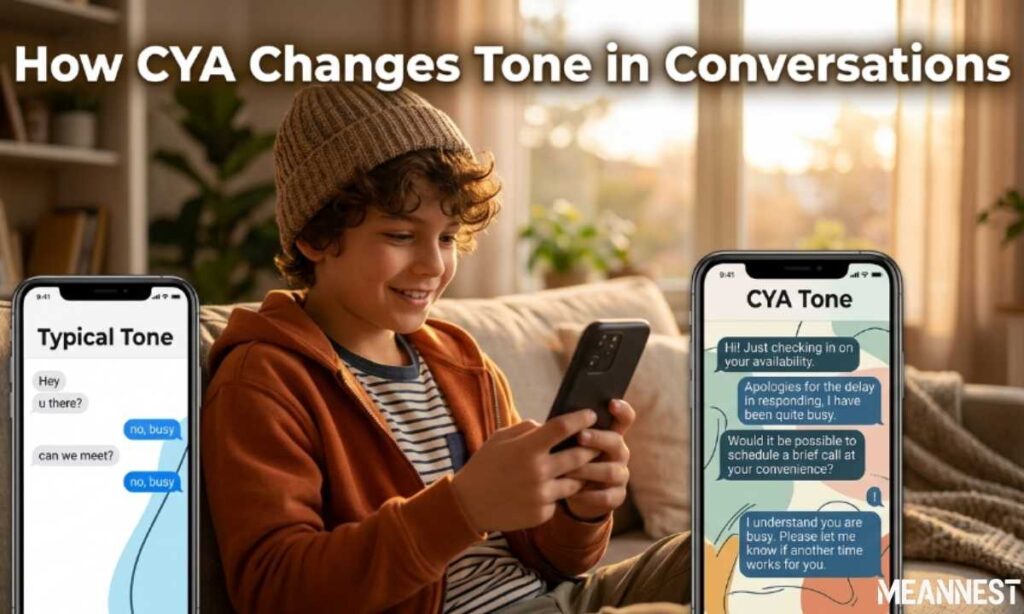
The way you use CYA can completely shift the mood of a conversation in seconds.
- “CYA later” feels warm and casual, like a quick goodbye between close friends.
- “This is a CYA email” signals seriousness and self-protection in a work setting.
- “Just a CYA heads-up” adds a cautious, cover-yourself undertone to any message.
- “CYA on that one” can sound dismissive, like distancing yourself from responsibility.
- “Sending this for CYA purposes” implies formality and a need for documented proof.
| Version | Implied Tone |
| CYA later | Warm and friendly farewell |
| CYA email | Defensive and professional |
| CYA heads-up | Cautious and self-aware |
| CYA on that | Detached or blame-shifting |
| CYA purposes | Formal and document-focused |
A Quick Rule of Thumb
- Use “CYA” as a farewell only with people who know you well and text casually.
- In professional messages, always clarify whether you mean “see ya” or “cover your assets” to avoid awkward misreads.
- When in doubt, spell it out a clear phrase always beats an ambiguous abbreviation in serious conversations.
When You Should (And Shouldn’t) Use CYA
Knowing when to use CYA is just as important as knowing what it means.
Use CYA (See Ya) In:
- Wrapping up a casual text with a close friend
- Ending a lighthearted group chat conversation
- Saying goodbye in a relaxed, informal setting
- Quick sign-offs with someone you text regularly
Avoid CYA In:
- First-time messages with someone you just met
- Texting someone older or in a formal role
- Any conversation that has been serious or emotional
- Messages to coworkers you don’t know well
Use CYA (Cover Your Ass) In:
- Sending an email where blame could shift to you
- Documenting a decision that others might dispute later
- Following up on a conversation with written proof
- Any situation involving deadlines, money, or responsibility
Never Use It When:
- The other person doesn’t know the abbreviation at all
- You’re in a high-stakes professional or legal exchange
- The message involves sensitive or emotional subject matter
- There is zero context to clarify which version you mean
Casual Friendly Use Cases for CYA

CYA fits perfectly in light, everyday conversations where the vibe is relaxed and familiar.
- Works best when both people already text casually with each other
- Great for quick sign-offs when you’re in a rush
- Keeps the message short and breezy without sounding cold
- Feels natural in ongoing chats that are already informal
Examples:
- “Heading out now, CYA at the mall!”
- “That was fun, CYA next weekend for sure.”
- “Gotta sleep, CYA tomorrow at school.”
- “Late for class, CYA later bestie!”
The “Cover Your Ass” Meaning Why It Matters
In professional life, CYA takes on a completely different weight, one that is less about goodbyes and more about self-protection.
It Expresses:
- A need to document decisions before someone disputes them later
- Awareness that blame can shift unexpectedly in team or workplace settings
- The habit of keeping written proof of conversations, approvals, or instructions
- A mindset of staying prepared for situations that could go wrong
Real workplace examples

- A project manager missed a deadline because tasks were never clearly assigned to anyone.
- A new employee felt lost in their first week due to lack of proper onboarding support.
- Two departments kept duplicating work because they had no shared communication channel.
- A client complaint was ignored for days since no one took direct ownership of the issue.
- A team meeting wasted an hour with no clear agenda or decisions made at the end.
Every workplace challenge is a hidden opportunity to build stronger systems, smarter habits, and more connected teams.
Variations & Spellings of CYA
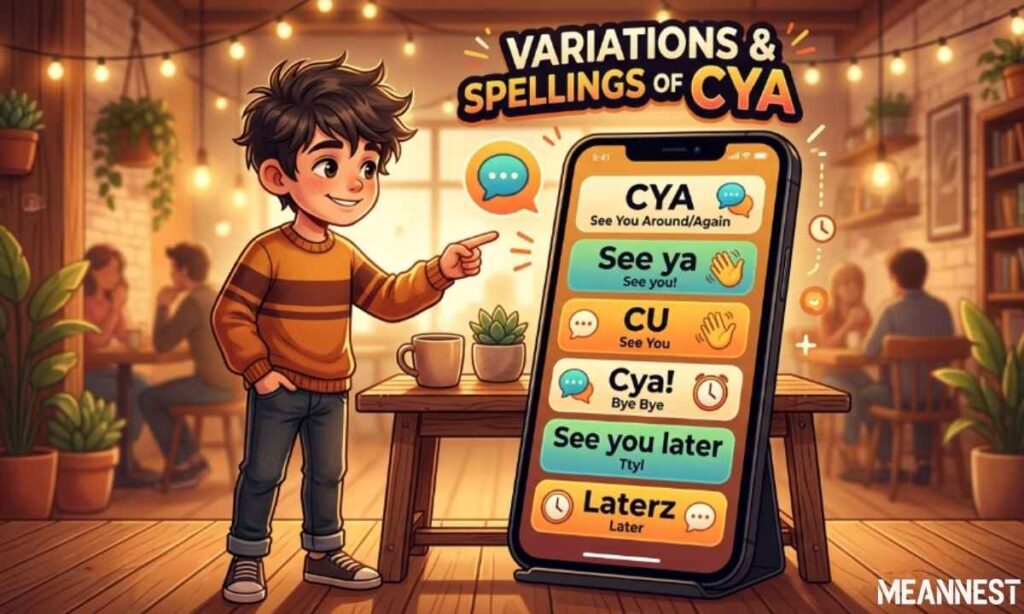
| Variation | Meaning | Tone | Typical Usage |
| CYA | Cover Your A** | Neutral/Professional | Emails, workplace memos |
| C.Y.A. | Cover Your Assets | Formal | Legal and HR documents |
| Cya | See Ya (goodbye) | Casual/Friendly | Text messages, chats |
| CYOA | Cover Your Own A** | Emphatic | Personal accountability talks |
| CYB | Cover Your Back | Protective | Team and peer conversations |
| Cover Your Six | Protect yourself fully | Military/Tactical | Defense and security contexts |
| CYA Email | Self-protective message | Cautious/Defensive | Corporate paper trails |
Every variation of CYA carries the same core idea: protect yourself before problems arise, whether in a boardroom, a text message, or a formal legal document.
Best Alternatives to CYA (Based on Situation)
When CYA feels too blunt or informal, smarter alternatives can carry the same protective message with better tone. In professional settings, phrases like “document everything”, “confirm in writing”, or “establish accountability” work far more effectively.
Choosing the right alternative based on your situation keeps you covered while maintaining trust and credibility with the people around you.
Casual / Friendly Alternatives
When the mood is light and the crowd is familiar, simpler words carry the message just fine.
- Watch out
- Stay safe
- Head’s up
- Be careful
- Cover up
- Stay sharp
- Look out
The right word at the right moment hits harder than any formal phrase ever could.
See ya meaning

“See ya” is one of the most natural and effortless ways to say goodbye in everyday conversation.
- It means goodbye in a relaxed, informal way.
- Used between friends, family, and close colleagues.
- Often said when parting is temporary, not permanent.
- Carries a warm and friendly tone with no formality.
- Common in texts, chats, and casual face-to-face farewells.
Simple as it sounds, “see ya” holds a genuine warmth that makes every goodbye feel lighter.
Cover your ass meaning
“Cover your ass” means taking deliberate steps to protect yourself from blame, consequences, or future problems.
- It means documenting actions so no one can hold you wrongly responsible.
- Used when situations carry risk, uncertainty, or potential conflict.
- Signals a need to create a clear paper trail for protection.
- Common in workplaces, legal settings, and high-stakes decisions.
- Reflects a mindset of self-preservation before problems even arise.
At its core, it is about being smart and prepared before someone else makes their move against you.
Social media slang
Social media has created its own language, where short slang terms replace full sentences every day.
- CYA is used to mean both goodbye and self-protection in posts.
- Slay means to do something with confidence and style.
- No cap means speaking the complete truth with no exaggeration.
- Lowkey means feeling something quietly without making it obvious.
- It hits different means something feels uniquely powerful in the moment.
Knowing social media slang keeps you connected, relevant, and always part of the conversation.
Casual goodbye text
A casual goodbye text keeps things light, warm, and completely free of formality.
- “Cya!” is the quickest and most effortless way to sign off.
- “Gotta run!” signals you are leaving in a hurry but friendly way.
- “Later!” is short, cool, and carries a relaxed, confident tone.
- “Talk soon!” leaves the door open for future conversation naturally.
- “Take care!” adds a touch of warmth and genuine concern before leaving.
The best goodbye text is the one that feels true to your voice and leaves a good feeling behind.
Online chat abbreviations
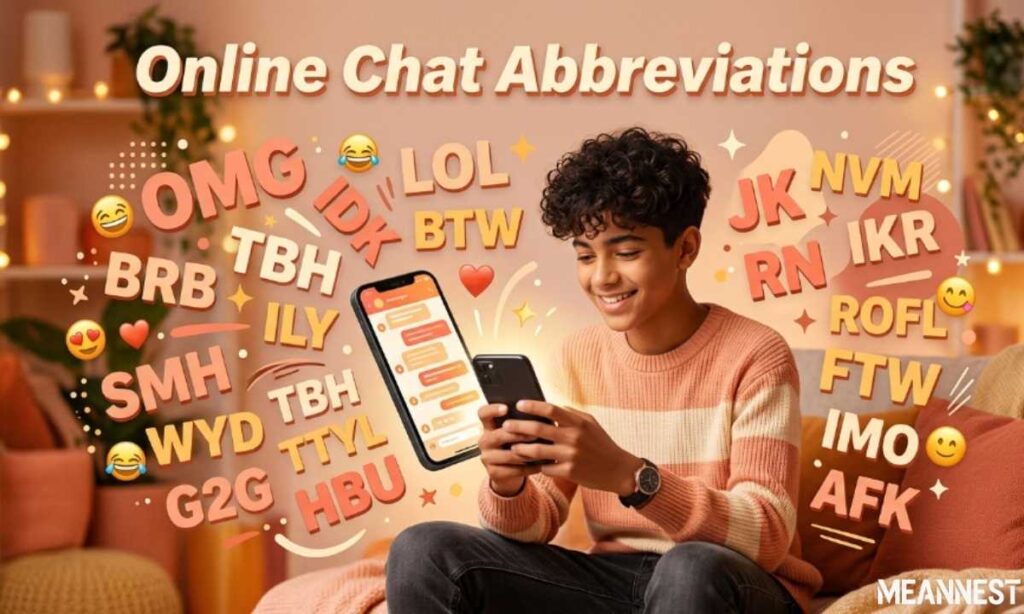
Online chat abbreviations turn long expressions into quick, punchy terms that keep conversations moving fast.
- LOL means laughing out loud, used to show genuine amusement in chats.
- BRB stands to be right back, signaling a short temporary break.
- IMO means in my opinion, used to share personal views casually.
- AFK stands for away from the keyboard, letting others know you are not available.
- TTYL means talk to you later, a warm way to wrap up a conversation.
Mastering these abbreviations makes you a faster, smoother communicator in any online space.
Polite / Semi-Professional Alternatives
When the setting calls for more respect but still feels relaxed, these words strike the perfect balance.
- Document
- Verify
- Confirm
- Clarify
- Acknowledge
- Safeguard
Choosing a polished word over casual slang instantly raises your credibility and presence in any room.
Professional / Business Alternatives

In business settings, the right phrase protects you while keeping your image sharp and credible.
- “Document for the record” creates a clear paper trail without sounding defensive.
- “Confirm in writing” ensures every agreement and decision is formally captured.
- “Establish accountability” shifts focus to ownership and responsibility professionally.
- “Mitigate risk” signals strategic thinking and proactive problem prevention.
- “Ensure compliance” aligns your actions with company standards and legal expectations.
Using professional language instead of slang shows you are serious, prepared, and always one step ahead.
High-Stakes or Formal Alternatives

When the situation carries serious consequences, only the most precise and formal language will do.
- “Indemnify yourself” legally shields you from financial loss or liability in advance.
- “Maintain due diligence” proves you took every reasonable and expected precaution.
- “Preserve a written record” protects your position with documented, timestamped evidence.
- “Exercise fiduciary responsibility” shows you acted in the best interest of all parties.
- “Establish a liability waiver” formally transfers risk and legal exposure away from you.
In high-stakes environments, the right formal phrase is not just smart — it is your strongest line of defense.
Quick Guide: Choosing the Right Goodbye
| Situation | Best Option | Avoid |
| Leaving a formal meeting | “Thank you, goodbye” | “Cya” or “Later” |
| Texting a close friend | “Cya!” or “Later!” | “Regards” or “Sincerely” |
| Ending a business email | “Best regards” or “Warmly” | “Bye” or “See ya” |
| Wrapping up a team call | “Talk soon, take care” | “Gotta run” |
| Saying bye on social media | “CYA” or “TTYL” | Formal sign-offs |
| Leaving a client conversation | “Looking forward to connecting” | Slang or abbreviations |
Example Messages You Can Copy
Whether you are wrapping up a chat or signing off from a big work email, having the right message ready saves you time and keeps your tone always on point. These examples cover every situation so you never have to think twice about what to say.
From casual texts to formal farewells, each message here is crafted to feel natural and human, not robotic or stiff. Pick the one that fits your mood and moment, copy it, and send it with full confidence.
Casual / Friendly

These messages work best when the vibe is relaxed and the person on the other end knows you well.
- “Cya later!” quick, warm, and totally effortless to send.
- “Talk soon, take care!” friendly closure that leaves a good feeling behind.
- “Gotta run, catch you later!” energetic and natural for fast-moving chats.
- “Later! “ one word that says everything without overdoing it.
- “Alright, I’m out cya!” casual, fun, and very human in tone.
- “TTYL, have a good one!” breezy sign-off with a genuine warm touch.
The most memorable goodbyes are the ones that sound exactly like you.
Date / Relationship Texting

When texting someone special, the right words can leave them smiling long after you hit send.
- “Can’t wait to see you again!” ends the conversation on a warm, exciting note.
- “Had the best time, cya soon “ light, sweet, and full of genuine feeling.
- “Miss you already, talk later!” honest and emotionally close without being heavy.
- “Thinking of you, cya tonight!” builds anticipation while keeping things breezy.
- “You made my day, talk soon!” simple words that carry a big emotional impact.
- “Until next time “ is a soft, warm song that feels personal and memorable.
The best relationship texts are the ones that make the other person feel seen and valued.
Workplace Messaging
In the workplace, every message you send shapes how others see your professionalism and reliability.
- “Thanks for the update, talk soon!” friendly yet respectfully professional.
- “Noted, I’ll follow up shortly.” shows ownership without overcommitting.
- “Appreciate the discussion, signing off!” warm close after a productive exchange.
- “Let’s reconnect tomorrow, take care.” keeps the door open professionally and warmly.
- “All good from my end, speak soon!” confident and clear with no ambiguity.
- “Great working with you today!” leaves a positive lasting impression every time.
The right workplace message builds trust, saves time, and keeps every professional relationship strong.
CYA meaning on Snapchat
On Snapchat, CYA is used as a quick and casual way to say “see ya” before snapping out.
- People snap “CYA!” when they are heading offline or done chatting for the moment.
- It carries a light, breezy tone with zero formality in streaks or DMs.
- Often paired with a selfie or leaving emoji to make the goodbye more fun.
- Used between close friends who keep their snaps short and straight to the point.
- It signals a temporary goodbye, not a permanent one, so expect a snap back soon.
On Snapchat, CYA is less about protection and more about keeping goodbyes fast and friendly.
CYA meaning on TikTok
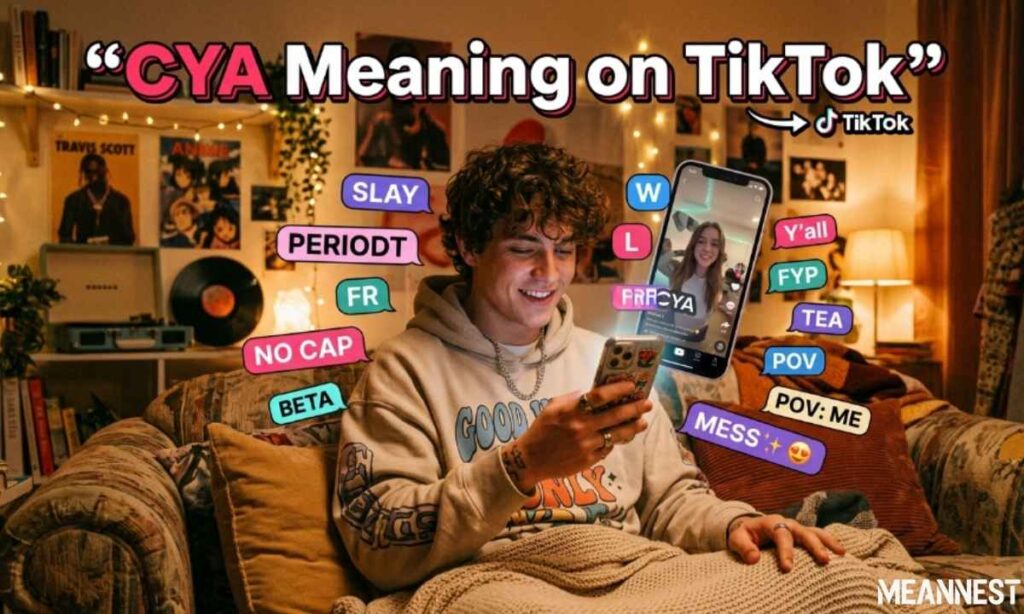
On TikTok, CYA pops up in comments and captions as a fun, fast way to say “see ya” or protect yourself.
- Creators drop “CYA!” in video captions when signing off from a series or trend.
- In comments, it means “see ya” and is used to react to someone leaving a conversation.
- Some TikTokers use it in a self-protection context when calling out shady or risky behavior.
- It pairs naturally with trending audio and text overlays to add a quick, punchy goodbye.
- The tone is always bold and playful, fitting perfectly with TikTok’s fast and loud culture.
On TikTok, CYA is more than a goodbye; it is a personality statement in three letters.
CYA meaning in WhatsApp chat
On WhatsApp, CYA is one of the quickest and most natural ways to wrap up a conversation and head out.
- Friends send “CYA!” in personal chats when they are signing off for the night or day.
- In group chats, it signals you are stepping away without making a big announcement.
- It keeps the conversation light and pressure-free, especially in ongoing daily chats.
- Sometimes paired with voice notes or emojis to add a more personal warm touch.
- Used across all ages on WhatsApp, making it one of the most universally understood sign-offs.
On WhatsApp, CYA is the digital equivalent of a friendly wave on your way out the door.
How to reply to CYA

When someone sends you CYA, the best reply is short, warm, and instant.
- Later!
- Bye!
- Soon!
- Take care!
- Absolutely!
A quick reply to CYA keeps the energy light and leaves every conversation on a positive note.
Is CYA rude in texting

Whether CYA comes across as rude depends entirely on the context and relationship behind the message.
- Context
- Tone
- Relationship
- Platform
- Intent
Used with the right person at the right moment, CYA is never rude, it is just real and human.
CYA vs TTYL
Both CYA and TTYL are popular sign-offs, but each carries its own distinct feel and purpose.
- Tone
- Length
- Warmth
- Formality
- Frequency
CYA exits fast and sharp, while TTYL leaves the door open with a warmer, softer promise.
More Serious / Formal Goodbye Examples
When the moment calls for respect and professionalism, a well-chosen formal goodbye leaves a lasting impression.
- “It was a pleasure working with you” sincere, warm, and always professionally appropriate.
- “Thank you for your time and consideration” shows genuine gratitude in high-stakes settings.
- “I look forward to our continued collaboration” signals long-term commitment and respect.
- “Please don’t hesitate to reach out” keeps the relationship open and professionally accessible.
- “Wishing you continued success” ends on a positive and dignified note every time.
A formal goodbye is not just an ending, it is the last chance to reinforce your professionalism and character.
Common Miscommunications to Avoid
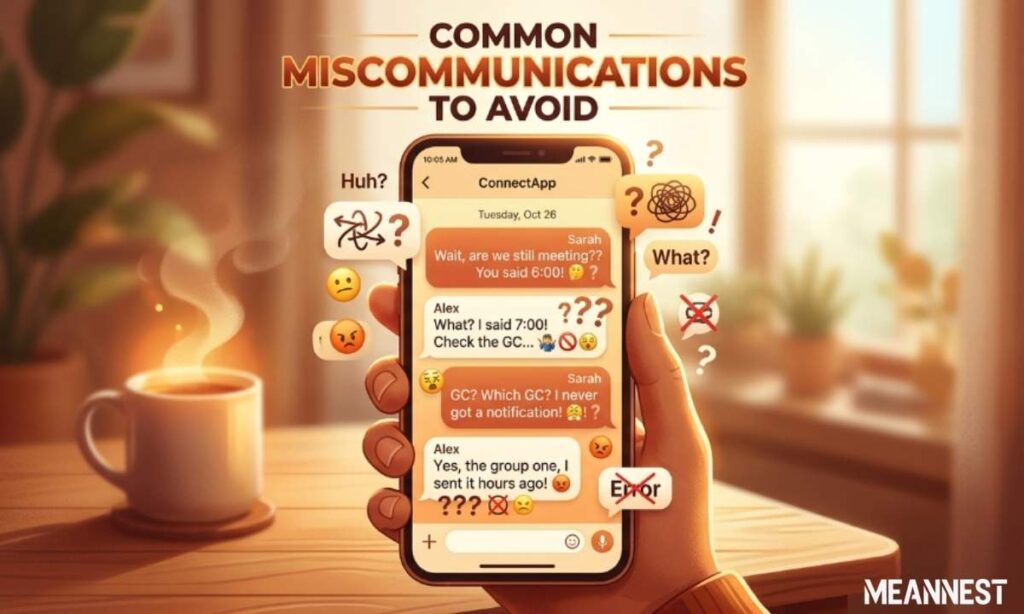
Even the most well-intended message can land the wrong way when the context is misread.
- Sending “CYA” to a boss can seem dismissive or disrespectful without proper tone.
- Using casual slang in formal emails creates confusion about your level of seriousness.
- Ending a tense conversation with “Later!” can feel cold and emotionally dismissive.
- Typing “noted” alone without follow-up often reads as passive-aggressive and distant.
- Skipping a sign-off entirely leaves the other person unsure if the conversation is over.
Being mindful of tone and timing is what separates a clear communicator from a confusing one.
Origin & Background of CYA
CYA, short for “Cover Your Ass,” originated in mid-20th century American bureaucratic and military culture as a self-protective practice.
It emerged from environments where individuals felt the need to document actions and decisions in order to shield themselves from blame or accountability when things went wrong.
Over time, the term spread far beyond its institutional roots and became a widely recognized concept in corporate, legal, and everyday professional life.
Today it describes any behavior, document, or communication strategy used to protect oneself from criticism, legal liability, or organizational backlash in the face of uncertainty or risk.
Emotional & Psychological Meaning

CYA is deeply rooted in the human fear of judgment, failure, and loss of control.
- It reflects a deep anxiety about being blamed for outcomes beyond one’s control.
- It stems from a lack of trust in the systems or people around us.
- It serves as an emotional shield against shame and public embarrassment.
- It signals an underlying need for security and self-preservation at work.
- It reveals how fear-driven cultures push people into defensive behavior.
Understanding this pattern is the first step toward building healthier, more honest environments.
Digital-native communication style
| N0. | Trait | What It Means |
| 1 | Brevity | Messages are short, sharp and straight to the point. |
| 2 | Visuals | Emojis and images replace long emotional descriptions. |
| 3 | Speed | Replies are expected fast, often within minutes. |
| 4 | Tone | Casual and informal language feels more natural than formal writing. |
| 5 | Platform | The channel chosen says as much as the message itself. |
Acceptable in informal teams

Informal teams tend to embrace a more relaxed communication style that feels natural and human.
- Casual language builds trust and removes unnecessary barriers between people.
- Quick voice notes replace long typed messages in fast-moving group chats.
- Emojis and humor make everyday updates feel warmer and less robotic.
- Skipping formalities speeds things up without hurting the team dynamic.
- Direct feedback is welcomed because the environment feels psychologically safe.
When a team feels comfortable together, informal communication becomes one of its greatest strengths.
May feel dismissive
Sometimes a short reply, even if well intended, can leave the other person feeling ignored or undervalued.
- A one-word response like “okay” signals disinterest more than agreement.
- Skipping someone’s question entirely feels like their words did not matter.
- Replying without acknowledging emotion makes people feel unseen.
- Short replies in serious conversations can come across as cold or rude.
- Using slang or humor in the wrong moment easily reads as dismissive.
Being aware of your tone and timing is what separates casual communication from careless communication.
How to Respond When Someone Says CYA Casual Replies
When someone says CYA in a casual setting, the best response is to keep it light and match their energy naturally.
A simple “you too” or a laugh works perfectly fine in most everyday situations. There is no need to overthink it when the tone is already relaxed and friendly.
If the context feels a bit more serious or professional, a short acknowledgment like “got it, staying covered” shows you understood the intent without making things awkward.
Reading the mood of the conversation is what helps you respond in a way that feels genuine. A well-placed reply always lands better than a forced or overly formal one.
Regional & Cultural Usage Western Culture

In Western culture, CYA is deeply embedded in both workplace language and everyday conversation across the US, UK, and Australia.
It grew out of a strong cultural emphasis on individual accountability and the fear of being personally blamed when things go wrong.
The phrase became a natural shorthand in environments where self-protection was seen as not just smart but necessary.
American and British professionals especially use CYA as a standard practice in corporate settings, often without a second thought. The idea of documenting decisions, sending confirmation emails, and keeping paper trails is culturally normalized in these regions.
It reflects a broader Western mindset that values transparency, legal protection, and personal responsibility above collective trust.
Frequently Asked Question
What Does CYA Mean in Text?
CYA means “See You” in texting. People use it when they are ending a chat in a friendly way.
Is CYA a Friendly Slang?
Yes, CYA is friendly and casual. It is commonly used between friends in online conversations.
Where Do People Use CYA Most?
CYA is used on WhatsApp, Instagram, Snapchat, and other social media apps.
Is CYA the Same as Goodbye?
Not exactly. It is a softer and shorter way of saying goodbye, often meaning “see you later.”
How Do You Reply to CYA?
You can reply with “CYA too,” “Bye,” or “See you soon” depending on the chat.
Is CYA Still Used in 2026?
Yes, CYA is still used in 2026 in casual texting and online messaging.
What Does CYA Mean From a Girl?
It simply means “See You.” The meaning does not change based on gender.
Is CYA Formal or Informal?
CYA is informal. It is only used in casual chats, not in professional messages.
Can CYA Have Other Meanings?
Yes, in some cases it can mean “Cover Your Ass,” but in texting it usually means “See You.”
When Should You Use CYA?
You should use CYA when ending a conversation in a quick and friendly way.
Conclusion
CYA is a simple and friendly slang word used in texting and online chats. People use it to say goodbye in a quick and casual way. It is still popular on social media and messaging apps in 2026. Knowing its meaning can help you understand modern online conversations better.
Now you know the real meaning of CYA and the best ways to reply to it. You also learned when to use it in daily chats with friends and online groups. Short slang words like CYA make texting faster and easier. Using them correctly can make your conversations sound more natural and fun.

Michael is a creative writer with 4 years of experience exploring meanings and clever puns through his blog. He now works at Meannest.com, where he continues crafting engaging, witty content that connects ideas, language, and humor for readers worldwide diverse.
