

ATP Meaning in Text is showing up everywhere in chats, social media posts, and online conversations. If you have seen ATP in a message and wondered what it means, you are not alone. This short acronym can have different meanings depending on the situation.
In 2026, ATP Meaning in Text will be commonly used by younger users across platforms like texting, TikTok, and Instagram. Understanding the context is the key to knowing what someone means. In this guide, you will learn the full meaning of ATP, how people use it, and real examples from everyday conversations.
What Is ATP?
ATP is the main source of energy used by living cells.
- Stores and releases chemical energy
- Found inside every living cell
- Produced mainly in mitochondria
- Powers muscle movement and growth
- Breaks down to release usable energy
Without ATP, cells could not survive or function.
ATP, or Adenosine Triphosphate, is a small molecule that acts like a rechargeable battery for the cell, carrying energy to wherever it is needed.
When the cell requires power, the phosphate bonds in ATP break apart, releasing energy that drives muscle movement, growth, and countless other life processes.
What Does ATP Mean in Texting & Online Conversations?

ATP is a popular slang term used in chats, captions, and comments.
- Usually means “At This Point”
- Shows frustration or acceptance
- Can also mean “Answer The Phone”
- Common on TikTok and Snapchat
- Best used in casual chats only
Knowing the right meaning helps you reply with the correct tone.
In most chats and social posts, ATP stands for “At This Point,” a casual way of showing that someone has reached a conclusion after dealing with something for a while, often carrying a tone of tiredness or acceptance.
Less often, the same letters are used to mean “Answer The Phone,” sent when someone keeps calling and wants a quick response.
Common Conversation Scenarios
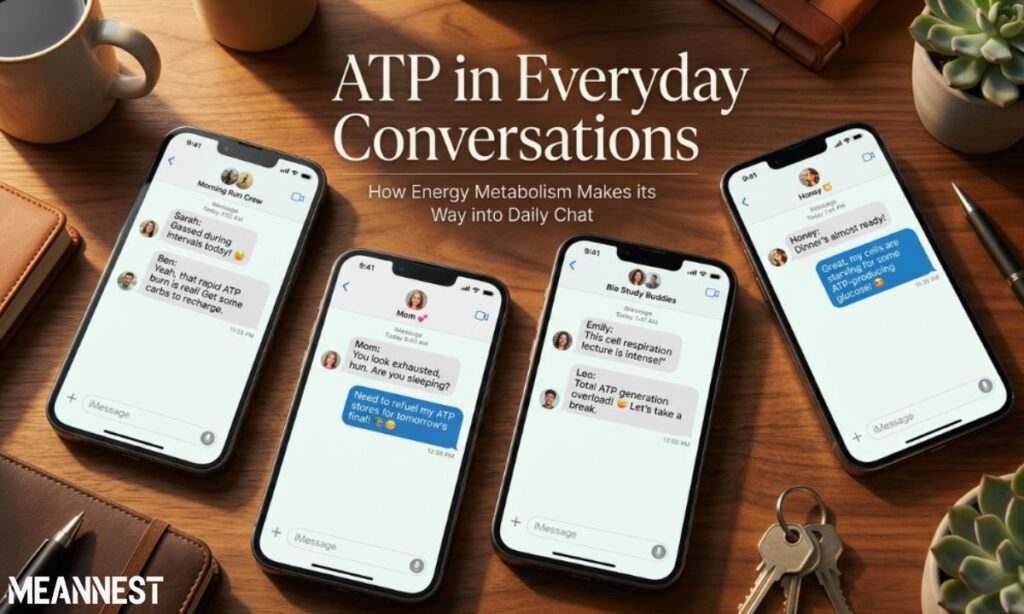
| Situation | ATP Example | What It Really Means |
| Tired of waiting | “ATP just send it” | Done being patient |
| Giving up on plans | “ATP I’m staying home” | Reached a final decision |
| Calling someone | “ATP!! pick up” | Wants the call answered |
| Venting to a friend | “ATP I don’t care” | Showing frustration |
| Reacting to drama | “ATP this is too much” | Expressing exhaustion |
| Accepting a situation | “ATP whatever happens” | Letting go of control |
Is ATP Formal or Informal?
ATP fits certain places only.
- Casual text messages
- Social media captions
- Friend group chats
- TikTok video comments
- Snapchat quick replies
- Informal online banter
It does not belong in:
- Formal business emails
- School research papers
- Professional job interviews
- Official government documents
- Teacher student conversations
- Workplace meeting notes
Using ATP in formal settings can confuse people. It is best kept strictly casual.
When Should You Use ATP? (Context Matters)
ATP works best when you are texting close friends or reacting to something on social media in a light, casual way. It fits naturally into group chats, comment sections, and captions where the tone is relaxed and people already understand internet slang.
Before using it, think about who is reading the message and what platform you are on, since the same word can sound playful or rude depending on tone and context. If you are unsure whether the moment calls for casual slang, it is safer to simply write out your actual feelings in plain words.
Good Times to Use ATP

ATP slips naturally into conversations when the mood is casual and relaxed.
- Chatting with close friends
- Replying to funny memes
- Writing quick captions
- Reacting to group messages
- Expressing mild frustration
It works best when the moment calls for a quick, honest reaction.
ATP is most effective in everyday chats where someone wants to share a quick feeling without writing a long explanation, like reacting to a friend’s update or a trending social media moment.
It suits situations where both people share a relaxed tone and already understand common internet slang terms.
When NOT to Use ATP
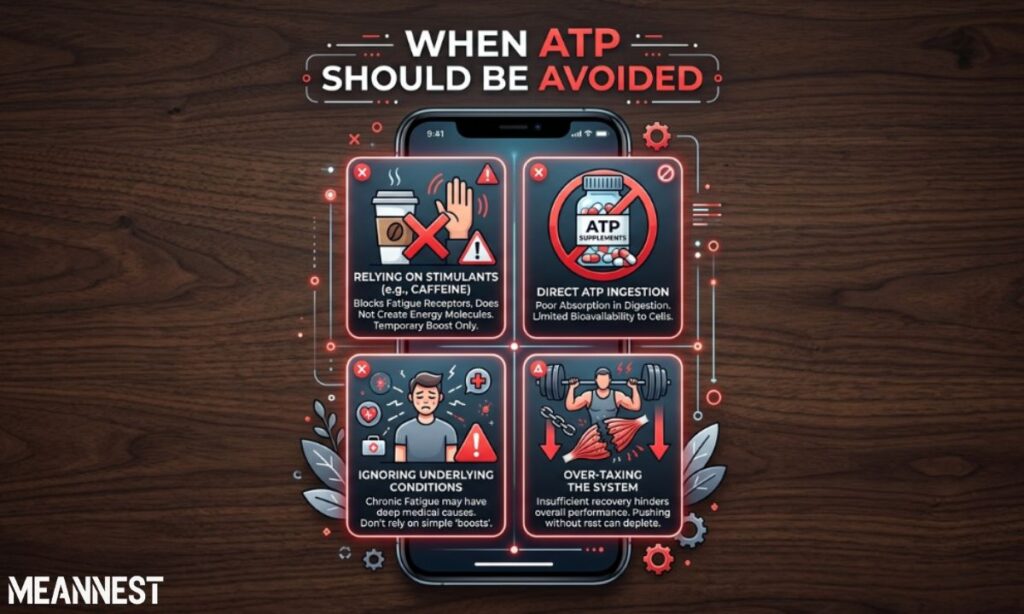
Some situations call for clear, plain language instead of casual slang.
- Formal work emails
- Talking to teachers
- Serious family discussions
- Official job applications
- Professional client messages
Using ATP in these moments can make a message seem careless.
ATP should be avoided in formal situations where clarity and professionalism matter, such as writing to a teacher, boss, or anyone outside your casual circle.
In these moments, plain and direct wording communicates the message far better than internet slang terms ever could.
Different Emotional Tones Behind “ATP”
The same word can carry very different feelings depending on the moment.
- Frustration and annoyance
- Calm acceptance instead
- Playful sarcasm sometimes
- Tired exhaustion overall
- Urgent need expressed
Reading the surrounding message helps reveal which tone is meant.
ATP can sound frustrated, calm, sarcastic, or simply tired, depending on the words around it and the conversation’s mood.
The same three letters might show someone giving up, accepting a situation, or just reacting quickly, so the real feeling always depends on the surrounding context.
Why People Sometimes Avoid Using ATP

Not everyone feels comfortable using this slang in their messages.
- Fear of sounding rude
- Worry about misunderstanding
- Unfamiliar internet term
- Preference for clear words
- Concern over formal image
Choosing plain language often feels safer in uncertain conversations.
Some people skip ATP because they worry it might come across as rude or dismissive, especially when the receiver does not share the same slang familiarity.
Others simply prefer writing in full sentences to avoid any misunderstanding, particularly in conversations where tone is hard to judge through text alone.
Best Alternatives to “ATP” (Depending on Emotion)

Different feelings call for different words instead of just typing ATP.
- Frustration: “I’m done”
- Acceptance: “I guess so”
- Urgency: “Call me now”
- Sarcasm: “Sure, whatever”
- Exhaustion: “I’m so tired”
Picking the right phrase makes your real feeling much clearer.
Tone Comparison: ATP vs Alternatives
| Expression | Tone Level | Best Use Case |
| ATP | Very casual | Friend chats |
| I’m done | Mildly frustrated | Venting moments |
| I guess so | Neutral acceptance | Reluctant agreement |
| Call me now | Urgent request | Missed calls |
| Sure, whatever | Light sarcasm | Joking replies |
| I’m exhausted | Tired honest | Real feelings |
| Whatever happens | Calm resignation | Letting go |
Example:
ATP, I’m done.
Sure, whatever, fine.
Call me now.
Where ATP Fits Best (Platform Breakdown)
| Platform | Should You Use ATP? | Why |
| TikTok | Yes, definitely | Casual captions |
| Snapchat | Yes, often | Quick reactions |
| Yes, sometimes | Comment sections | |
| Twitter/X | Yes, frequently | Short reactions |
| Yes, casually | Friend chats | |
| Discord | Yes, commonly | Gaming chats |
| Maybe, rarely | Mixed audience | |
| No, avoid | Formal tone | |
| No, never | Professional space |
Mini Grammar Guide for ATP

A few small rules help ATP read naturally in any message.
- Capital letters preferred
- No period needed
- Place it first usually
- Pair with short sentence
- Skip extra punctuation marks
Following these simple habits keeps your texts looking natural and casual.
Realistic Message Examples (For Every Scenario)

Real examples show how ATP fits naturally into daily texting.
- “ATP I’m leaving”
- “ATP just relax”
- “ATP call me”
- “ATP I’m tired”
- “ATP whatever works”
Each example reflects a slightly different emotional moment.
Common Misunderstandings About ATP
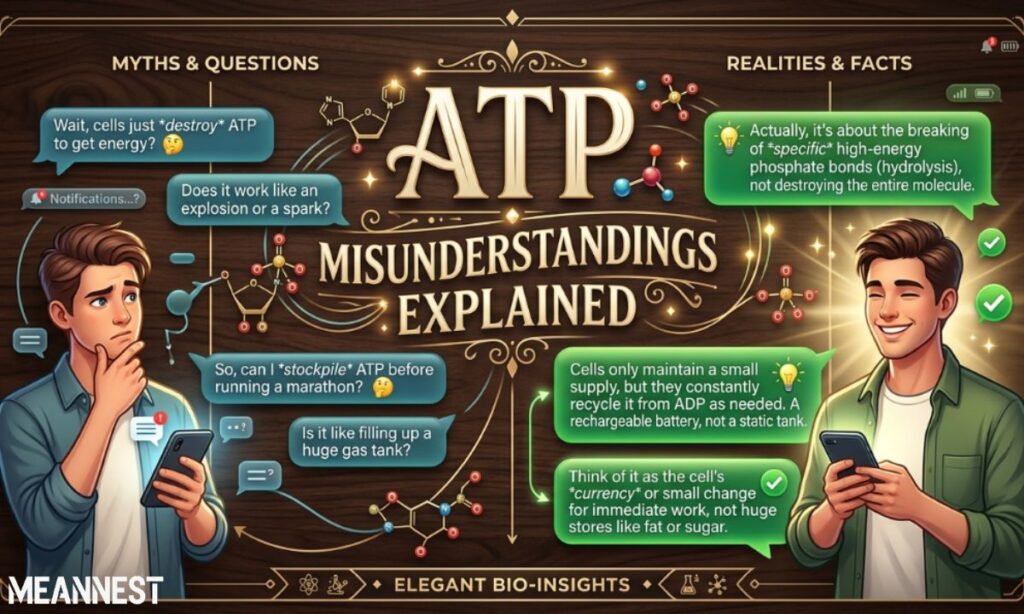
A few mix-ups happen often when people first see ATP.
- Confused with biology
- Mistaken for rudeness
- Assumed always negative
- Thought to be insulting
- Used in wrong context
Clearing up these mix-ups makes texting feel less confusing.
Is ATP a Word, Acronym, or Phrase?
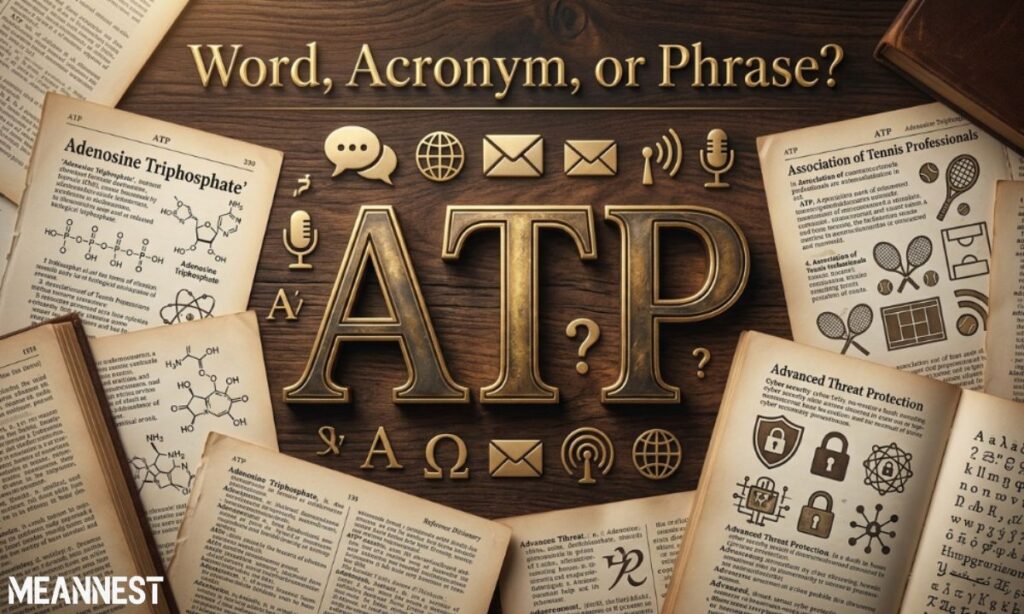
ATP technically works as a short acronym, not a full word.
- Stands for phrase
- Three letter shortcut
- Not dictionary word
- Functions like phrase
- Used as expression
Knowing this helps explain why it feels so flexible in chats.
How ATP Is Usually Used
ATP almost always appears at the start of a sentence.
- Begins the sentence
- Followed by reaction
- Paired with short thought
- Written in caps
- Rarely stands alone
This pattern keeps the message quick and easy to read.
Common Contexts Where You’ll See ATP

ATP shows up most often in casual digital spaces.
- Group text threads
- Social media captions
- Comment section replies
- Story reaction replies
- Casual voice messages
These settings share a relaxed, informal style of communication.
The Secondary Meaning: “Answer the Phone”
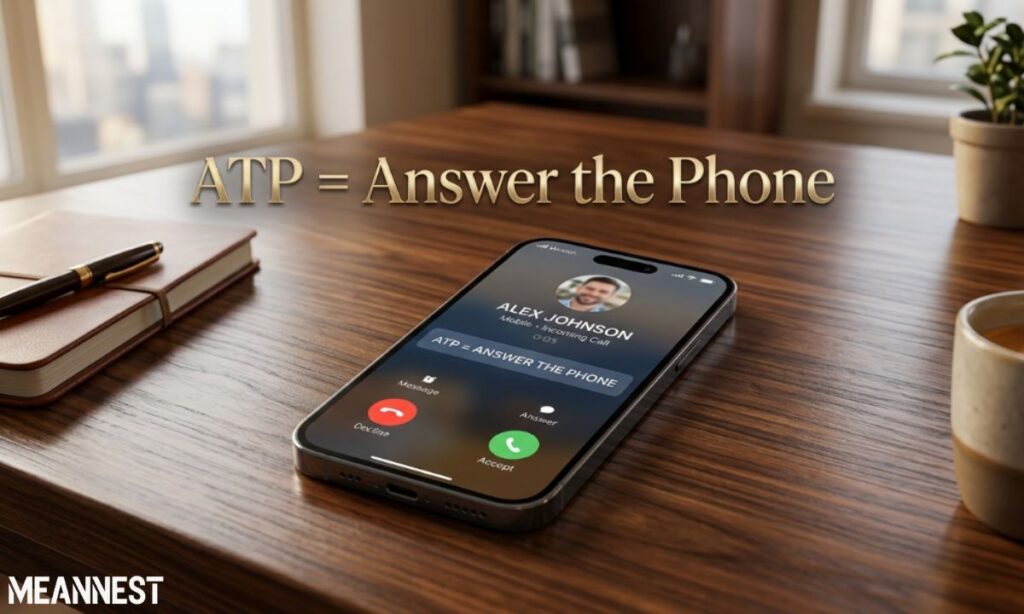
A less common meaning of ATP relates to missed calls.
- Used during calls
- Shows urgent request
- Sent after ignoring
- Common with family
- Less popular meaning
Context usually makes it clear which meaning is intended.
Pronunciation and Part of Speech
ATP is usually spoken as separate letters, not one word.
- Said letter by letter
- Functions as interjection
- No fixed spelling rule
- Works like an adverb
- Spoken casually aloud
This loose structure fits its informal, expressive purpose.
When spoken aloud, ATP is usually pronounced letter by letter rather than as one blended sound.
Grammatically, it behaves a bit like an interjection or adverb, since it adds tone and timing without following strict grammar rules.
Examples of ATP in Real Sentences
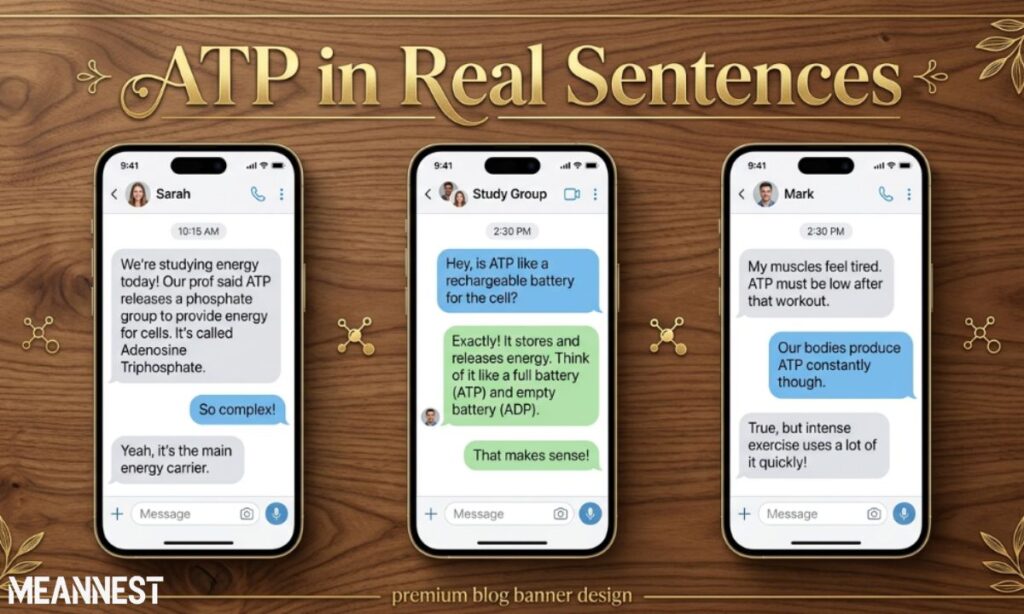
Seeing ATP inside full sentences shows its natural flow.
- “ATP, I’m exhausted.”
- “ATP, just leaving now.”
- “ATP, who cares.”
- “ATP, call me back.”
- “ATP, this is funny.”
Each sentence keeps the tone short, casual, and direct.
When to Use ATP and When Not to Use It
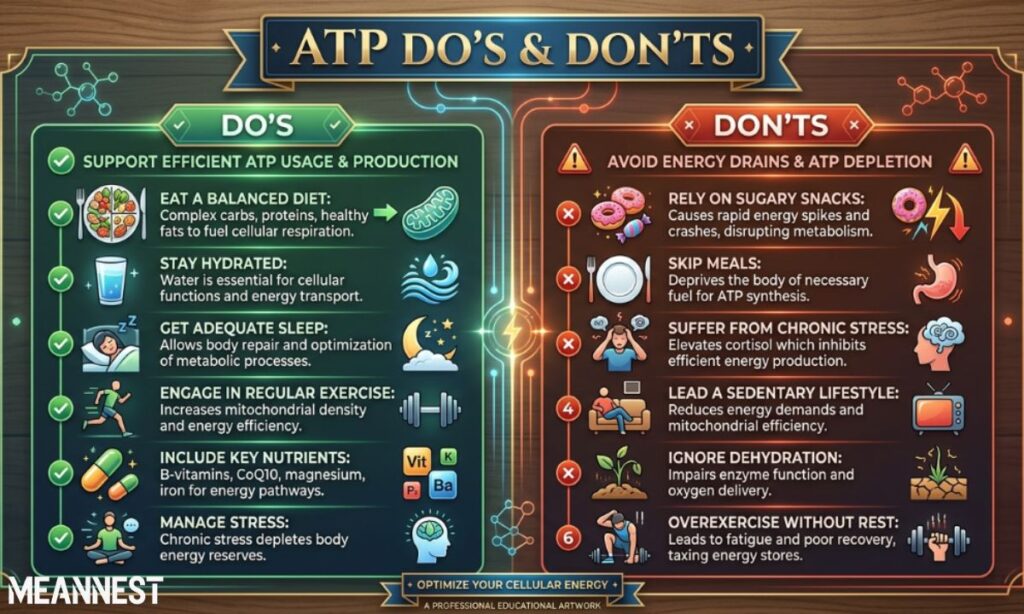
Context decides whether ATP fits the moment or not.
- Use with close friends
- Use in casual captions
- Avoid in formal emails
- Avoid with strangers
- Avoid in professional chats
Matching the tone to the audience keeps messages clear.
Common Mistakes and Confusions
A few small errors often happen when people use ATP.
- Using in formal text
- Confusing with biology
- Sending without context
- Assuming universal meaning
- Misreading the tone
Avoiding these slip-ups makes the slang easier to use well.
Related Terms, Synonyms, and Antonyms
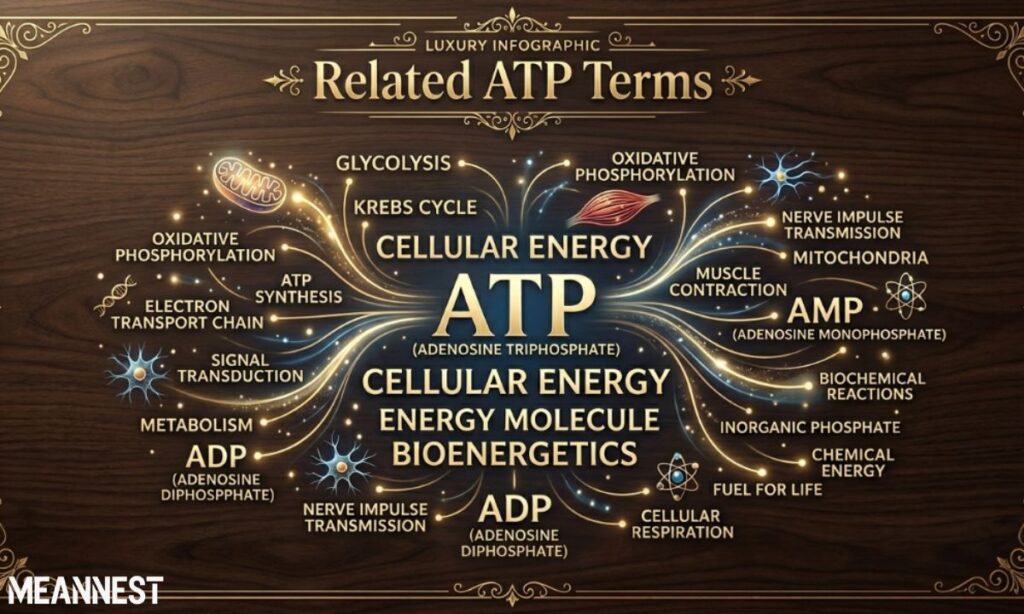
Several other slang terms share a similar casual energy.
- Synonym: “I’m done”
- Synonym: “Honestly though”
- Synonym: “At this rate”
- Antonym: “Never mind”
- Antonym: “All good”
Comparing these terms shows how flexible casual slang can be.
Quick Comparison Table
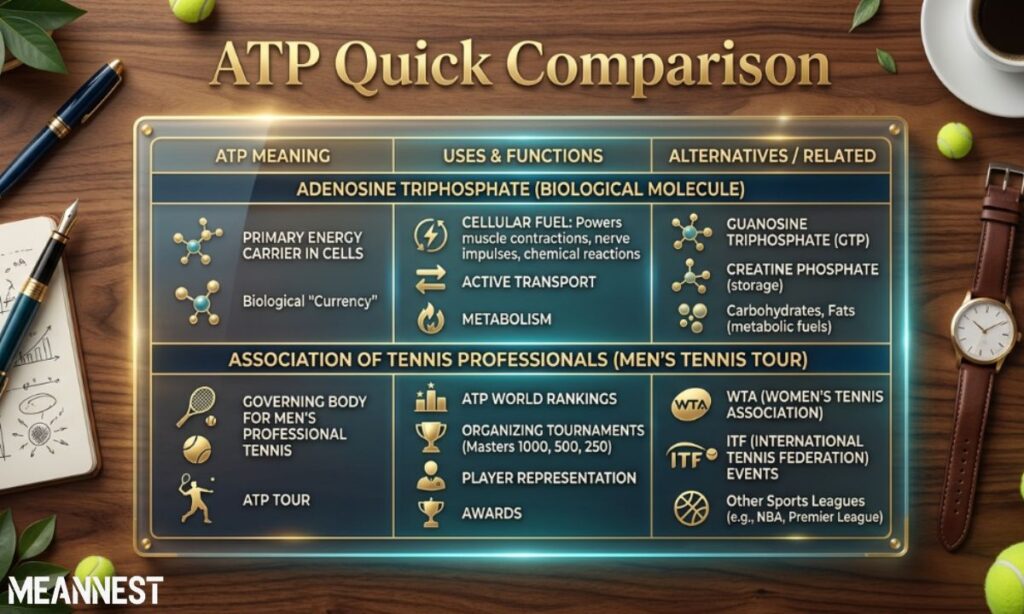
A quick side-by-side view makes the differences easy to spot.
| Term | Tone | Common Use |
| ATP | Casual | Quick reactions |
| Answer the Phone | Urgent | Missed calls |
| I’m done | Frustrated | Venting |
| All good | Calm | Reassurance |
| Never mind | Dismissive | Dropping a topic |
This table highlights how meaning shifts with each version.
Looking at ATP alongside its secondary meaning and related phrases makes the differences in tone much clearer at a glance.
Each version carries its own shade of meaning, from quick casual reactions to urgent requests for attention.
Frequently Asked Question
What Does ATP Mean in Text?
ATP Meaning in Text usually stands for “At This Point.” People use it when talking about their current thoughts, feelings, or situation.
How Is ATP Used in Text Messages?
ATP is often used to show a decision, opinion, or status at the present moment in a conversation.
Does ATP Mean the Same Thing on Social Media?
Most of the time, ATP means “At This Point” on social media, but its meaning can vary depending on the context.
What Does ATP Mean on TikTok?
On TikTok, ATP commonly means “At This Point” and is used in captions, comments, and videos to express a current view.
Is ATP a Popular Texting Slang in 2026?
Yes, ATP remains a popular texting abbreviation in 2026, especially among younger users on social media platforms.
Can ATP Have More Than One Meaning?
Yes, ATP can have different meanings in different fields, but in texting it most often means “At This Point.”
When Should I Use ATP in a Message?
You can use ATP when talking about your current situation, opinion, or a decision you have made.
What Is an Example of ATP in a Sentence?
Example: “ATP, I think it’s better to stay home and relax.” Here, ATP means “At This Point.”
Why Do People Use ATP Instead of Writing the Full Phrase?
People use ATP because it saves time, makes texting faster, and keeps messages short and casual.
How Can I Know the Correct Meaning of ATP?
Look at the conversation’s context. In most text messages and social media posts, ATP Meaning in Text refers to “At This Point.”
Conclusion
ATP Meaning in Text may look confusing at first, but it is easy to understand once you know the context. This popular abbreviation is still widely used in 2026 across texting and social media platforms. Knowing its meaning can help you avoid misunderstandings and follow conversations more confidently.
As online language continues to evolve, ATP Meaning in Text remains one of many slang terms worth learning. Staying updated with these expressions makes chatting easier and more enjoyable. The next time you see ATP in a message, you will know exactly what it means and how it is being used.

Michael is a creative writer with 4 years of experience exploring meanings and clever puns through his blog. He now works at Meannest.com, where he continues crafting engaging, witty content that connects ideas, language, and humor for readers worldwide diverse.
