STFU Meaning in Text: What It Means in 2026

Have you seen someone type STFU and felt confused or surprised? You are not alone. The STFU Meaning in Text is one of the most searched slang terms in online chats. It is commonly used

Written by: Michael

Published on: June 2, 2026

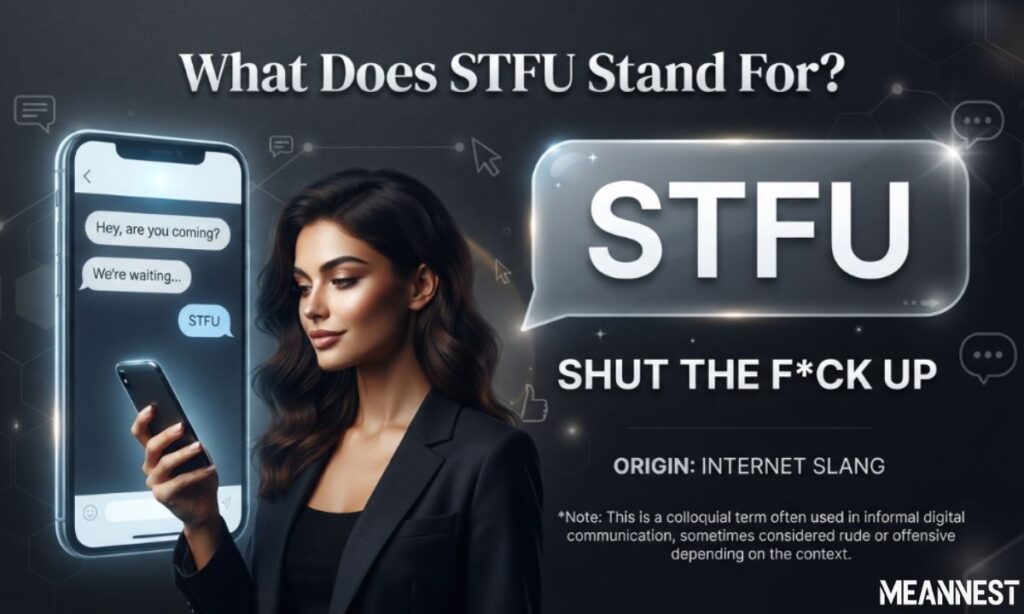
Have you seen someone type STFU and felt confused or surprised? You are not alone. The STFU Meaning in Text is one of the most searched slang terms in online chats. It is commonly used on social media and messaging apps to express strong feelings.

In 2026, STFU is still widely used in digital conversations. The STFU Meaning in Text can sound rude or funny depending on the situation. People use it in jokes, anger, or emotional replies. Understanding it helps you avoid confusion and reply correctly.

What Does STFU Mean in Text & Chat?

what-does-stfu-mean-in-text-and-chat

STFU is one of the most widely recognized slang terms in digital communication, used across texts, social media, and online chats every day.

  • STFU stands for “Shut The F* Up” and is used to tell someone to stop talking or be quiet.
  • It is mainly used in casual, informal conversations and is considered rude or aggressive in most contexts.
  • The term became popular in the early 2000s with the rise of SMS texting and online chat platforms.
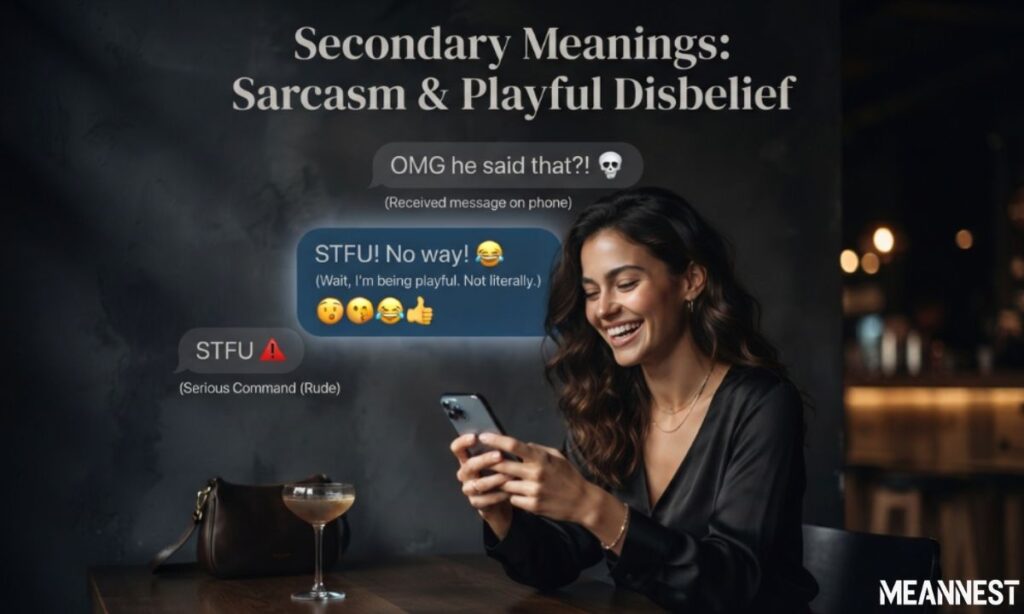
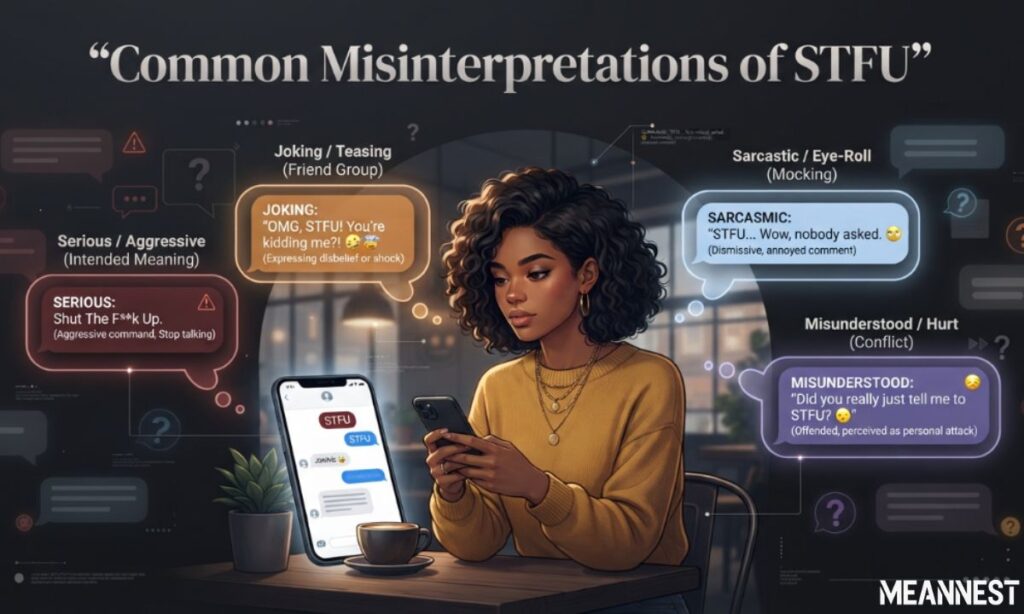
  • It can also be used playfully between close friends to express disbelief or shock, like “No way, STFU!”
  • Using STFU in professional or formal settings is highly inappropriate and should always be avoided.

Understanding context is everything with STFU it can be offensive or lighthearted depending entirely on who is saying it and to whom.

Full Form, Stands For & Short Meaning of STFU

full-form-stands-for-and-short-meaning-of-stfu

STFU is a popular internet slang term that has been part of online communication for over two decades.

  • Full form of STFU is “Shut The F*** Up,” a blunt phrase used to silence someone.
  • It stands for a strong demand to stop talking, often used in arguments or heated chats.
  • The short meaning is simply telling someone to be quiet, either seriously or jokingly.
  • STFU is most common on social media platforms like Twitter, Reddit, and Instagram.
  • It can carry different tones: aggressive when used in conflict, playful when used with friends.

Once you know its full form and meaning, using or interpreting STFU in any conversation becomes instantly clear.

Origin, History & First Known Use of STFU

“STFU” has a raw and rebellious origin that traces back to the early days of internet culture and online forums.

  • First appeared in early 1990s on Usenet and IRC chat rooms
  • Grew popular as online arguments became more common and heated
  • Spread rapidly through AOL Instant Messenger in the late 1990s
  • Became mainstream with the rise of social media in the 2000s
  • Today it appears in memes, tweets, and casual texts worldwide

From a niche internet term to a globally recognized phrase, “STFU” has one of the most unapologetically bold histories in digital slang.

How People Use STFU in Daily Conversations

how-people-use-stfu-in-daily-conversations

STFU shows up constantly in everyday digital conversations, and people use it in more ways than most realize.

  • People type STFU when they want someone to immediately stop talking or arguing online.
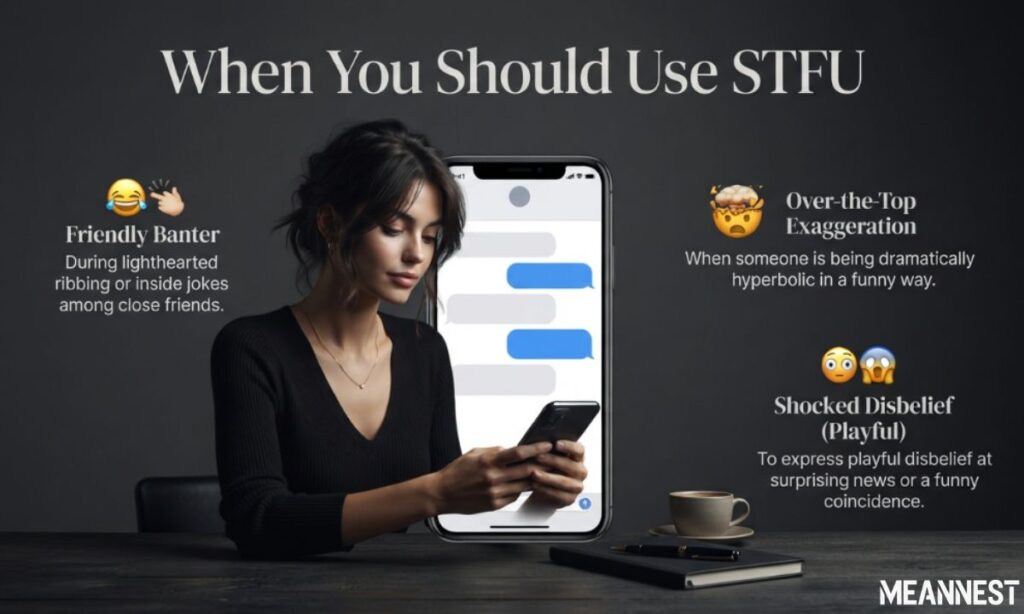
  • Close friends often use it to express pure shock or disbelief, not actual anger.
  • It appears heavily in comment sections during debates, fights, or heated discussions.
  • Teens and young adults drop STFU casually in group chats without any serious intent.
  • It is also used sarcastically to respond to something surprising or unbelievable.
See also  The Great Biblical Meaning of the Name BLAKE

Examples:

  • “No way, STFU!” Shocked reaction
  • “Just STFU already.” Angry dismissal
  • “STFU, seriously?!” Disbelief expressed
  • “Bro, STFU lol.” Playful teasing

Knowing how and when people use STFU helps you read the tone of any online conversation correctly.

STFU Meaning Across WhatsApp, Instagram, TikTok & Snapchat

STFU travels across every major platform but picks up a slightly different flavor depending on where it lands.

  • On WhatsApp, people use STFU in private chats to shut down arguments or joke with close friends.
  • Instagram comment sections are full of STFU reactions to shocking posts, reels, or celebrity drama.
  • On TikTok, creators and viewers drop STFU in comments to express wild disbelief or hype.
  • Snapchat users throw STFU into streaks and quick snaps as a playful, low-effort response.
  • Across all platforms, the tone and intent shift based on context, emoji, and who is talking.

Examples:

  • “STFU, no way!” Shocked fan
  • “Bro just STFU.” Annoyed reply
  • “STFU this is fire.” Hyped reaction
  • “Omg STFU lmao.” Playful disbelief

No matter the platform, STFU is one of those terms that everyone online instantly understands without any explanation.

Different Meanings of STFU in Other Fields

different-meanings-of-stfu-in-other-fields

While most people know “STFU” as internet slang, it carries surprisingly different meanings across various fields.

  • In gaming, it is used as a sharp comeback during heated matches
  • Some brands and memes have reclaimed it as a humorous marketing tool
  • In online activism, it signals that a point is too important to argue over
  • A few tech communities use it jokingly to mean “Stop The Feature Updates”
  • In comedy and pop culture, it often expresses genuine disbelief or shock

No matter the field, “STFU” always carries strong energy; the context around it is what shapes its true meaning.

Common Confusions, Mistakes & Wrong Interpretations

“STFU” is simple on the surface but gets misread and misused more often than most people realize.

  • Many people confuse its tone as purely hateful when it can be playful and joking
  • Some use it in professional chats without realizing how offensive it lands
  • It is often misread as deeply personal when it was meant casually between friends
  • People sometimes send it during serious arguments making the situation far worse
  • A few mistake it for a mild expression when it is actually quite blunt and strong

Understanding the full weight of STFU before you send it saves you from a lot of unnecessary and avoidable drama.

Similar Terms, Alternatives & Related Slang

similar-terms-alternatives-and-related-slang

If “STFU” feels too harsh, the English slang world has plenty of similar and softer options to pick from.

  • “Zip it” classic informal silencer
  • “Pipe down” lighter, still firm tone
  • “Can it” blunt but less aggressive feel
  • “Hush now” gentler, more playful expression
  • “Enough already” frustrated but not deeply offensive

Knowing these alternatives to STFU gives you the power to match your tone perfectly to the moment.

Examples of STFU in Real Chat Situations

examples-of-stfu-in-real-chat-situations

“STFU” shows up in real chats in ways that range from purely funny to genuinely sharp and serious.

  • “No way that happened, STFU!” total shock and disbelief
  • “STFU, you are literally lying” playful pushback between close friends
  • “Can you STFU for one second?” frustrated tone in a heated argument
  • “STFU this song is so good” used to express overwhelming excitement
  • “Bro just STFU already” blunt and fed up response to repeated nonsense

Real chat examples prove that “STFU” is never just one thing; its meaning lives entirely in the moment it is sent.

How to Reply When Someone Says STFU

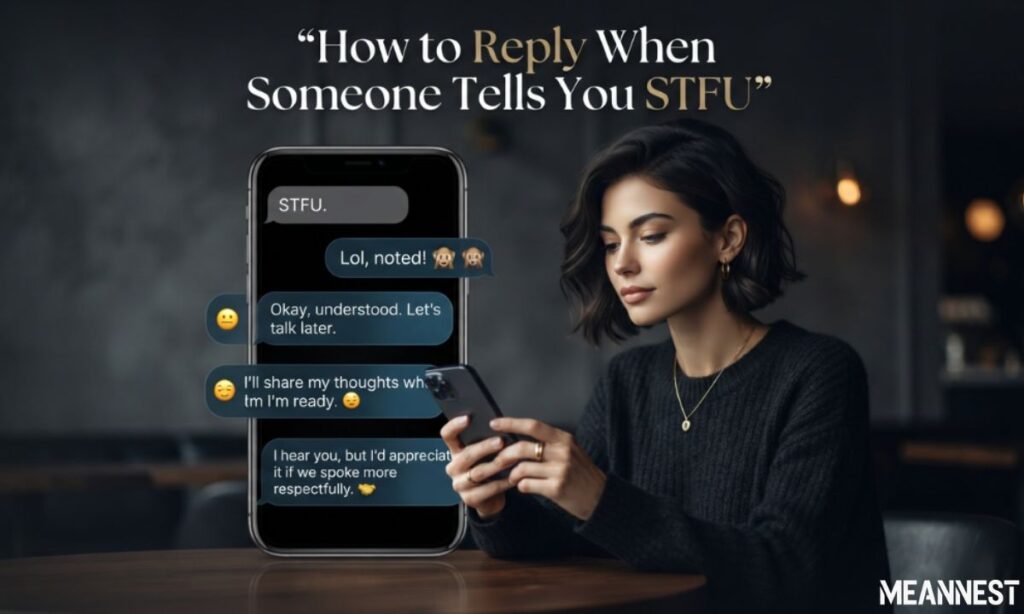
How you respond to STFU depends entirely on whether it was said jokingly or with real anger behind it.

  • Stay calm first do not react with instant emotion
  • If it was playful, match the energy with a funny comeback
  • If it felt serious, ask them directly what is bothering them
  • Avoid escalating firing back harshly only makes things worse
  • Sometimes the best reply is simply saying nothing at all

Tip:

Always read the tone before you respond to a wrong reaction to a joke that can turn a light moment into a real argument.

Your response to “STFU” says more about your emotional maturity than the person who sent it ever could.

Modern texting language

modern-texting-language

Modern texting language has completely transformed the way people communicate, connect, and express themselves every single day.

  • Short forms like “LOL,” “BRB,” and “IMO” replaced full sentences long ago
  • Emojis and reactions now carry emotions that words alone cannot express
  • Gen Z slang shifts so fast that even last year’s terms can feel outdated
  • Texting has its own grammar rules where lowercase often feels warmer than caps
  • Voice notes and memes are now just as common as typed messages in chats
See also  NF Meaning in Text: Real Meaning & How to Use

Understanding modern texting language is no longer optional; it is how the world talks to each other now.

Social media communication

social-media-communication

Social media communication has rewritten the rules of how people share, express, and connect with each other online.

  • Short captions and hashtags replaced long messages as the new normal
  • A single emoji or reaction can now say more than a full paragraph ever could
  • Public replies and comment threads turned private talk into group conversations
  • Stories and reels made communication more visual, fast, and disappearing
  • Tone is harder to read online which makes misunderstandings far more common

The way people communicate on social media keeps evolving, staying aware of its unwritten rules makes all the difference.

Online conversation terms

The world of online conversations runs on its own set of terms, codes, and unwritten rules that keep changing every year.

  • “AFK” means away from keyboard signals you are temporarily unavailable
  • “TL;DR” summarizes long posts for people who want the short version fast
  • “Thread” refers to a connected chain of replies under one original message
  • “Ghost” means someone stopped replying without any warning or explanation
  • “Ratio” is when a reply gets more engagement than the original post itself

Knowing these core online terms helps you navigate digital conversations with far more confidence and clarity.

Is STFU Still Popular? Trends & Online Usage

Despite being decades old, “STFU” is still very much alive and thriving across the internet today.

  • It remains one of the most searched slang terms on Google and social platforms
  • TikTok and Twitter keep it fresh by using it in viral memes and comment sections
  • Younger generations use it more as playful shock than as a genuine insult
  • Brands and influencers have even adopted it to sound bold and relatable online
  • Its usage actually spiked in recent years alongside the rise of reaction culture

“STFU” is not going anywhere if anything it has only grown louder, funnier, and more widespread with time.

Simple Explanation of STFU

simple-explanation-of-stfu

“STFU” is one of the most direct and no-nonsense abbreviations in all of internet slang.

  • It stands for “Shut The F* Up”**  a blunt way to say stop talking
  • Used when someone is annoyed, shocked, or just being playful with a friend
  • The tone can swing from genuinely angry to completely lighthearted and funny
  • Most commonly typed in casual chats, comment sections, and group messages
  • Almost always understood instantly because of how widely known it has become

At its core, “STFU” is simply a strong and fast reaction; the meaning depends entirely on who sent it and why. 

Is STFU Always Rude?

is-stfu-always-rude

SituationHow STFU Is UsedToneRude or Not
Close friends joking“No way, STFU! That is hilarious!”Playful and lightNot rude at all
Heated argument“Just STFU already!”Angry and sharpYes, very rude
Reacting to good news“STFU, you actually got the job?”Excited and shockedFriendly, not offensive
Strangers online“STFU nobody asked you”Aggressive and coldRude and unwelcoming
Memes and pop culture“STFU and take my money”Humorous and boldHarmless and widely accepted

STFU Usage Examples

Here are some real-world STFU usage examples that show how this term is used across different situations and tones.

ContextExampleTonePlatformMeaning
Shocked Reaction“No way, STFU!”DisbeliefTikTokCannot believe what was just said
Playful Banter“Bro STFU lmao”JokingWhatsAppFriendly, lighthearted teasing
Angry Response“Just STFU already.”AggressiveTwitterTelling someone to stop arguing
Hyped Comment“STFU this is fire!”ExcitedInstagramOverwhelmed by something amazing
Sarcastic Reply“Oh wow, STFU seriously?”SarcasticSnapchatMocking or playfully dismissing

Understanding the context and tone behind each use of STFU makes it much easier to read any online conversation correctly.

STFU acronym meaning

STFU is a four-letter acronym that has become one of the most recognized shorthand expressions in online communication.

  • S stands for “Shut,” the first and commanding word that sets the tone of the phrase.
  • T stands for “The,” a simple connector that completes the full aggressive expression.
  • F stands for a strong expletive word that adds intensity and bluntness to the phrase.
  • U stands for “Up,” completing the phrase as a direct demand to stop talking.
  • Together, the four letters form a phrase that can feel rude or playful depending on context.

Once you break down the STFU acronym letter by letter, its full meaning and emotional weight become completely clear.

Positive vs Negative Tone of STFU

positive-vs-negative-tone-of-stfu

STFU is one of those rare slang terms that can swing between a positive and negative tone depending entirely on how it is used.

  • In a negative tone, STFU is a blunt and aggressive demand that can feel disrespectful or hurtful.
  • Used positively, it expresses wild excitement or disbelief, like reacting to shocking good news.
  • The positive tone mostly appears between close friends who already share a playful dynamic.
  • A negative tone shows up in arguments, online fights, or when someone genuinely wants silence.
  • Emojis and punctuation alongside STFU are the biggest clues that reveal which tone is intended.
See also  OMW Meaning in Text: What It Means & Use 2026

Reading the full context around STFU is the only reliable way to tell whether it is meant warmly or as an insult.

When People Commonly Use STFU

when-people-commonly-use-stfu

STFU does not appear randomly; people reach for it in very specific moments and situations across daily digital life.

  • During online arguments, STFU is fired back as a quick and sharp way to shut down an opponent.
  • People use it in group chats when a friend shares something completely shocking or unbelievable.
  • It comes up during live gaming sessions when a teammate or opponent becomes too loud or annoying.
  • Fans drop STFU in comment sections when a celebrity or creator posts something jaw-dropping.
  • It is commonly used in reaction videos and memes to express over-the-top disbelief or excitement.

The most common moments for STFU are always tied to strong emotion, whether that is anger, shock, or pure hype.

STFU vs Similar Slang

There are several slang terms similar to STFU, but each one carries its own unique tone, intensity, and usage in online conversations.

Slang TermFull FormToneCommon UseIntensity
STFUShut The F*** UpAggressive or PlayfulArguments, shock reactionsVery High
ZIP ITZip ItMildly FirmCasual demand to stop talkingMedium
STFDSit The F*** DownAggressiveShutting down arrogance onlineHigh
BE QUIETBe QuietNeutral and PoliteFormal or calm request for silenceLow
SMHShaking My HeadDisappointedReacting to something disappointingMedium

Among all similar expressions, STFU remains the most direct and emotionally charged slang for telling someone to stop talking.

Is It Safe to Use STFU?

Using STFU is only safe when you know the person well and the conversation is clearly casual and playful. Throwing it at a stranger or in a sensitive situation can easily come across as rude and disrespectful.

Always think about who you are talking to and the tone of the conversation before typing STFU. In any professional, formal, or public setting, it is best to avoid the term entirely to protect your image and relationships.

How to Respond When Someone Says STFU

How you respond to STFU depends entirely on whether it was said with anger or humor toward you.

  • If it was playful, match the energy by laughing it off or throwing a funny reply right back.
  • When said with genuine anger, staying calm and not escalating is always the smarter move.
  • You can simply ignore it if the person is being toxic or trying to provoke a reaction online.
  • A confident “make me” reply works well among close friends in a lighthearted conversation.
  • If it feels hurtful or disrespectful, it is completely fair to call it out and set a clear boundary.

The best response to STFU is always the one that protects your peace and matches the actual tone of the situation.

Safer Alternatives to STFU

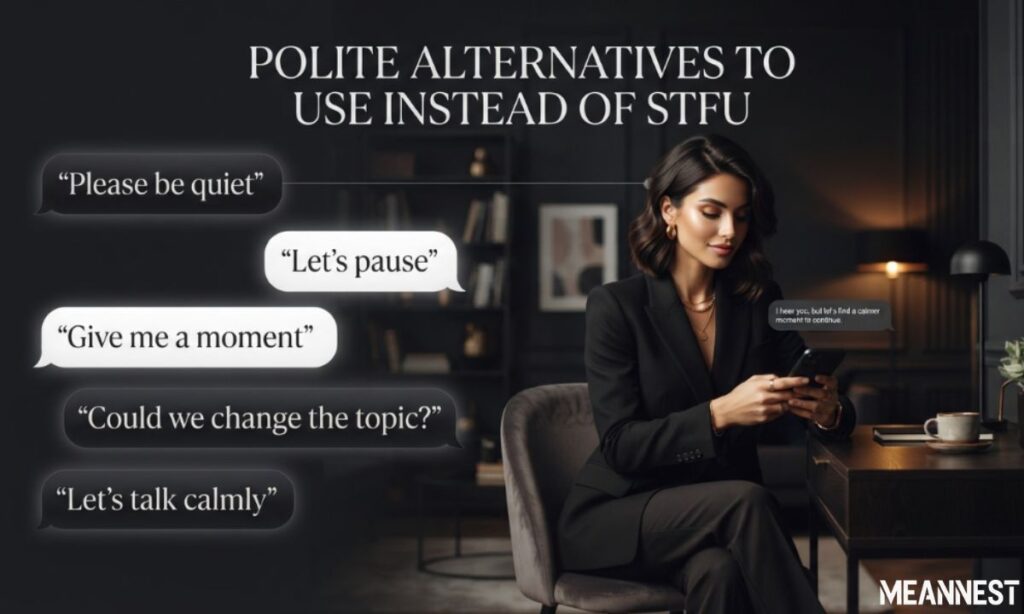
If you want to express the same feeling without the harsh edge of STFU, there are several cleaner alternatives that work just as well.

  • “Please stop” is a calm and direct way to ask someone to quit talking without sounding aggressive.
  • “Zip it” carries a firm but lighthearted tone that works well in casual friend conversations.
  • “No way!” is a perfect swap when you want to express shock or disbelief without any offense.
  • “Enough already” gets the point across clearly while staying respectful and composed in tone.
  • “I need a moment” is a mature and thoughtful phrase for when a conversation gets too overwhelming.

Choosing a safer alternative to STFU keeps your message clear while avoiding unnecessary conflict or hurt feelings.

Do’s and Don’ts of Using STFU

dos-and-donts-of-using-stfu

Knowing the do’s and don’ts of STFU can save you from unnecessary conflict and keep your online conversations healthy and respectful.

No.DoDon’t
1Use STFU playfully with close friends who understand your humorNever use it with strangers who may take it as a personal attack
2Pair it with emojis or lol to signal a lighthearted toneAvoid using it in serious or emotional conversations
3Use it to express genuine shock over exciting news or surprisesNever type it in professional chats, emails, or work groups
4Keep it for casual platforms like WhatsApp or private group chatsDo not use it to silence or bully someone who is already upset
5Reflect on the mood and context before sending it to anyoneNever assume everyone finds STFU funny or harmless in the same way

Following these simple do’s and don’ts ensures that STFU stays a fun expression rather than a source of conflict or misunderstanding.

Related Slang You May Like

related-slang-you-may-like

If you use STFU regularly, you will likely enjoy other popular slang terms like SMH, NGL, IMO, and TBH that carry the same casual and expressive energy. These terms are just as widely used across WhatsApp, Instagram, TikTok, and every other major platform.

Slang like IDK, BRB, LOL, and IRL are also worth knowing since they pop up constantly in everyday digital conversations. Learning these related terms helps you communicate faster, sound more natural, and stay fully in the loop online.

Frequently Asked Question

What Does STFU Mean in Text?

STFU stands for “Shut The F* Up.” It is a slang abbreviation used to tell someone to stop talking, often in a rude or joking way.

Is STFU Considered Rude in Text Messages?

Yes, STFU is generally considered rude because it contains profanity, though friends may sometimes use it playfully.

What Does STFU Mean on Snapchat?

On Snapchat, STFU usually means “Shut The F* Up” and is often used to express surprise, disbelief, or annoyance.

What Does STFU Mean on Instagram?

STFU on Instagram has the same meaning and may appear in comments, captions, or direct messages as a strong reaction.

Can STFU Be Used as a Joke?

Yes, some people use STFU jokingly with close friends, but it can still be offensive depending on the relationship and context.

Why Do People Say STFU in Texting?

People use STFU to express frustration, shock, excitement, or to tell someone to stop talking in a direct way.

Is STFU Appropriate for Professional Communication?

No, STFU is not appropriate for workplace, academic, or professional conversations because it is considered offensive language.

How Do You Respond to STFU in a Text?

Your response depends on the context. If it is joking, you may respond casually; if it feels disrespectful, address it calmly or end the conversation.

Are There Polite Alternatives to STFU?

Yes, alternatives include phrases like “Please be quiet,” “Let’s change the topic,” or “Can we pause this discussion?”

Does STFU Have Any Other Meanings?

While STFU almost always means “Shut The F Up,” its tone can vary from playful banter to serious annoyance based on the situation.

Conclusion

Now you clearly understand the STFU Meaning in Text and how it is used in 2026. It is a common slang word in online chats and social media. Sometimes it is funny, and sometimes it can sound rude. Knowing its meaning helps you avoid confusion in conversations.

The STFU Meaning in Text is part of modern internet language. People use it in different moods and situations. Always check the context before reacting to it. Understanding slang like STFU makes online communication easier and clearer.

Leave a Comment

Previous

TB Meaning in Text: What It Means in 2026