

Have you seen someone use DPMO in a text and wondered what it means? You are not alone. What Does DPMO Mean? Texting Guide for 2025 explains this popular slang in a simple and easy way. Knowing the meaning can help you avoid confusion in chats and social media conversations.
Texting slang changes fast, and DPMO is one term many people use online today. In this What Does DPMO Mean? Texting Guide for 2025, you will learn its meaning, tone, and when it should be used. By the end, you will understand exactly what someone means when they send DPMO in a message.
Understanding DPMO Meaning in Text Messages
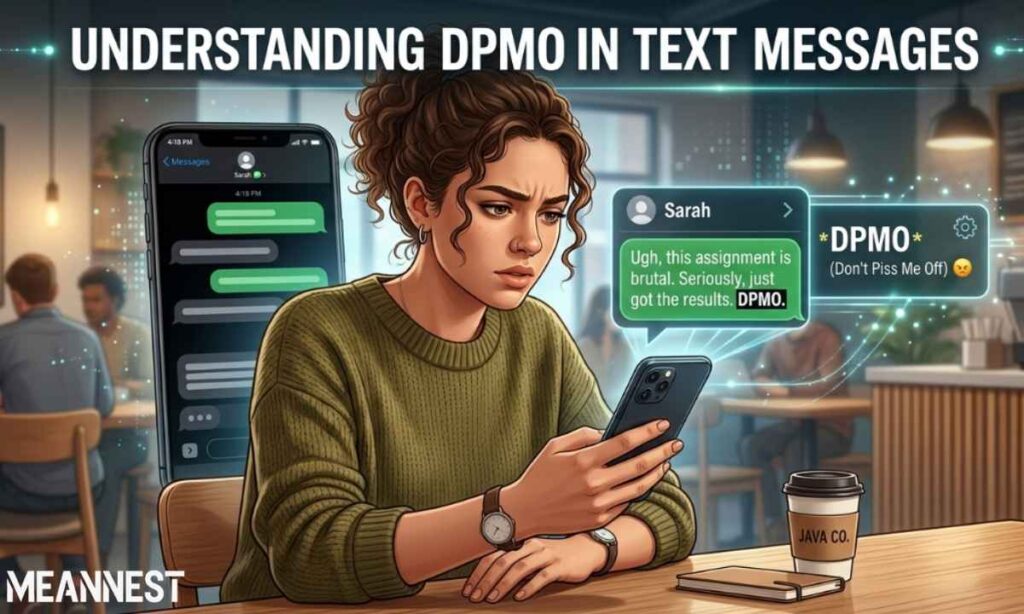
DPMO is a slang term widely used in text messages and online chats to express strong disagreement or dismissal.
- DPMO stands for “Don’t Piss Me Off” in casual digital conversation
- It is mostly used when someone feels irritated or disrespected by another person
- The term is common among younger generations on platforms like Snapchat and Instagram
- It signals that the sender has reached a limit of patience in the conversation
- Using DPMO usually means the tone has shifted from friendly to frustrated
| Variant | Meaning | Typical Use |
| DPMO | Don’t Piss Me Off | General frustration in any chat |
| DPM | Don’t Piss Me | Shortened casual version in texts |
| DPMO FR | Don’t Piss Me Off For Real | Stronger emphasis on seriousness |
| DPMO RN | Don’t Piss Me Off Right Now | Immediate irritation in the moment |
| DPMO BRO | Don’t Piss Me Off Bro | Used with friends in a direct tone |
| IDGAF DPMO | I Don’t Give a F DPMO | Combined slang for full dismissal |
| DPMO LOL | Don’t Piss Me Off (laughing) | Lighthearted or sarcastic warning |
Knowing the meaning of DPMO helps you better understand the emotional tone behind a message before you respond.
What DPMO Really Communicates About Tone and Emotion
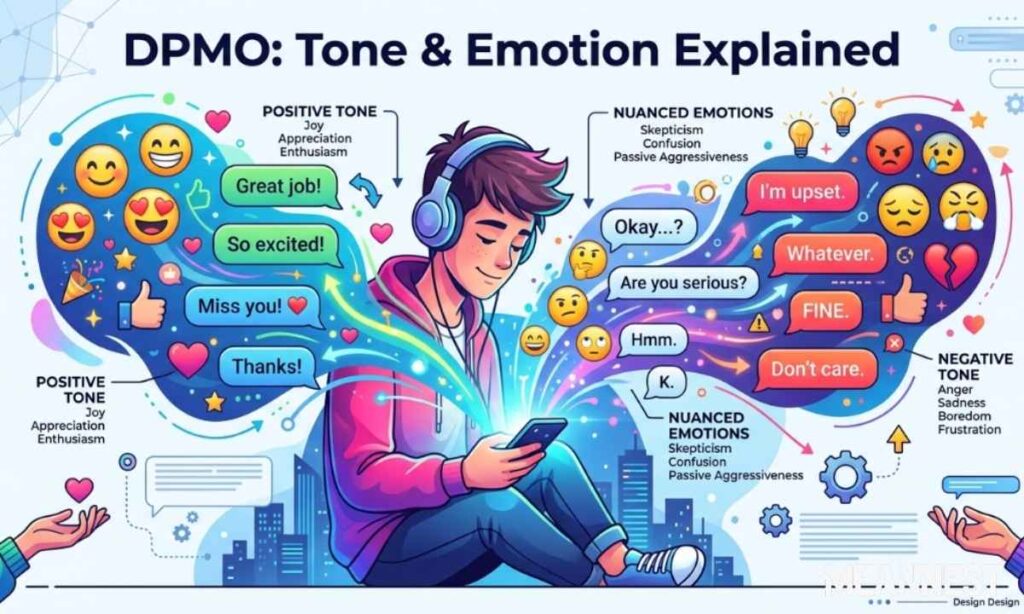
DPMO goes beyond words, it carries a clear emotional signal that the sender is done being patient.
- It shows the person is seriously annoyed and wants it to stop
- Often sent when someone feels they are being repeatedly disrespected
- The tone shifts from calm to confrontational instantly
- It acts as a final warning before the person disengages completely
- Context matters a lot since DPMO can be serious or playful depending on the chat
| Signal | Meaning |
| Sent in all caps | Person is genuinely angry and not joking |
| Sent with an emoji | Tone is lighter or sarcastic rather than truly upset |
| Sent after silence | Signals built-up frustration that finally broke out |
| Sent mid-argument | Means the person wants the other side to back off |
| Sent between close friends | Usually casual banter with no real offense meant |
| Sent to a stranger | Indicates a firm and serious boundary being set |
Reading the full context around DPMO is the only real way to know whether someone is truly upset or just keeping it casual.
Why DPMO Can Hurt More Than You Expect
Most people throw around DPMO without thinking twice, but the person receiving it does not always take it lightly. Even in a casual text conversation, being told “don’t piss me off” carries a sharp edge.
It signals rejection, frustration, and a loss of patience all at once. When someone reads those four letters, they often feel dismissed or shut down, even if that was never the full intention behind sending it.
Words in text have no tone of voice to soften the blow, so DPMO can land harder than expected.
- It can make the other person feel unwanted or pushed away suddenly
- There is no facial expression to soften it, so it reads as cold and final
- Receiving it from someone close to you stings far more than from a stranger
- It can trigger anxiety or self-doubt in people who are already sensitive
- One careless use can quietly damage trust that took a long time to build
Being mindful of when and how you send DPMO can save a relationship from an unnecessary crack.
When You Should Never Use “DPMO”
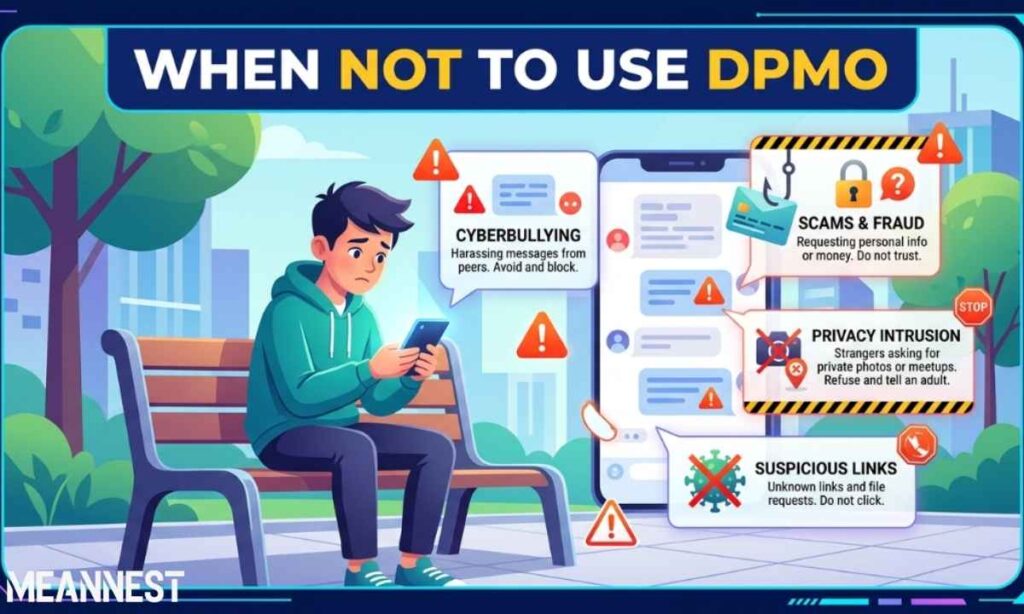
DPMO might feel harmless to send, but in certain situations it can cause real and lasting damage.
There are moments where using it is not just rude but genuinely harmful to the relationship.
- Never use it during a serious argument where emotions are already running high
- Avoid it completely when talking to someone going through a mental health struggle
- Do not send it to a boss, teacher, or anyone in a position of authority
- Never use it with someone who has just opened up to you about something personal
- Avoid it when the other person is clearly upset and looking for support from you
Knowing when to hold back DPMO is just as important as knowing what it actually means.
Smart Alternatives To DPMO (Without Losing Your Power)
You do not need to use DPMO to make your point land, there are smarter ways to set the same boundary.
These alternatives let you express frustration clearly without sounding aggressive or out of control.
- Say “I need you to stop” for a calm but firm boundary that still carries full weight
- Use “This is not okay with me” to make your feelings clear without attacking the other person
- Try “I am done with this conversation” when you need to exit without escalating things further
- Send “Please give me space right now” to signal irritation while keeping your dignity intact
- Simply saying “Not cool” works well with close friends and lands without unnecessary drama
Choosing better words over reactive slang keeps your power intact and your relationships much stronger.
Polite Alternatives To “Don’t Piss Me Off”
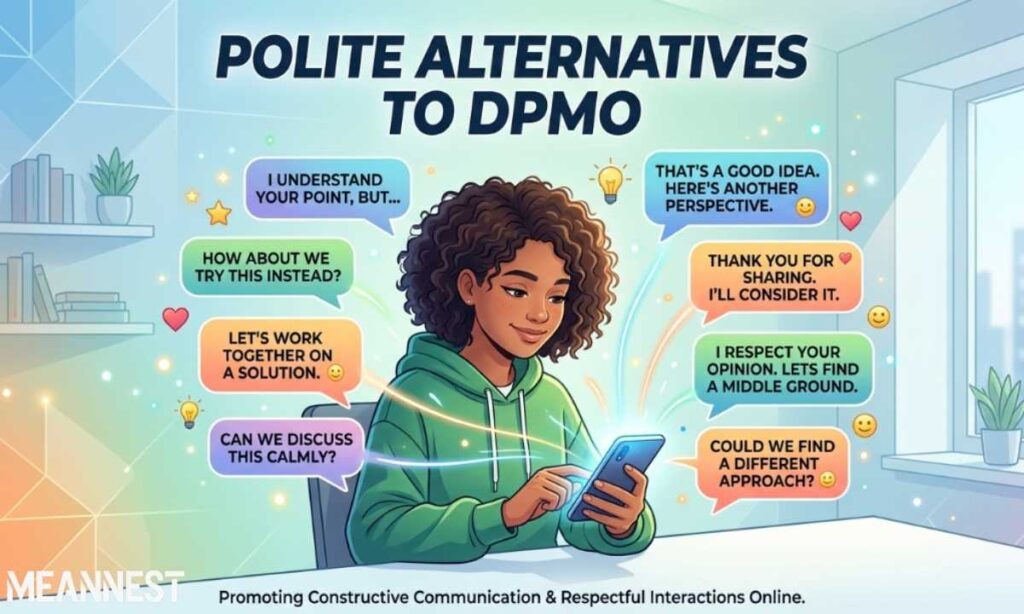
Saying “don’t piss me off” gets the point across but often leaves the other person feeling attacked rather than aware.
Swapping it for something more composed still sets a clear limit without damaging the tone of the conversation.
- “Please respect my boundaries” delivers the message firmly without any aggression attached
- “I am getting frustrated” is honest and direct while keeping the conversation open for both sides
- “Let us keep this respectful” signals your discomfort while putting responsibility on both people
- “I need you to hear me clearly” works when someone keeps crossing a line you have already drawn
- “This is not how I want to be spoken to” sets a standard without raising the emotional temperature
Choosing polite but firm language always leaves you looking composed and in full control of the situation.
Professional Alternatives For Tense Situations
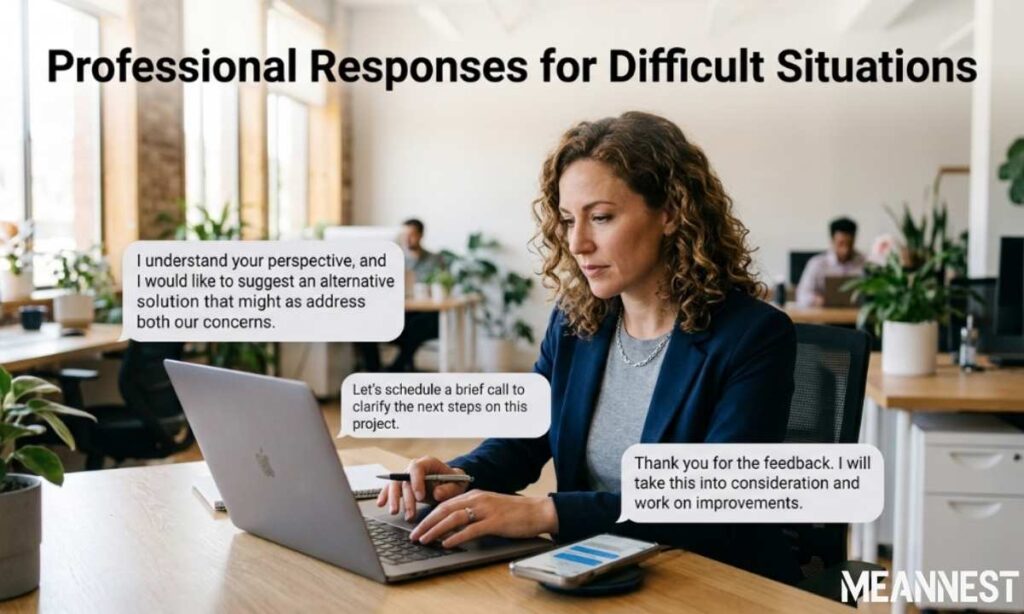
In tense or high-pressure moments, the words you choose define how seriously people take you.
- “Let us keep this conversation productive” redirects the energy without anyone losing face
- “I would appreciate a more respectful tone” sets a clear standard in a composed and mature way
- “I think we need to pause and reset” de-escalates the moment before things go too far
- “I am not comfortable continuing this way” draws a firm line without making it personal
- “Let us address this calmly and professionally” signals that you are still in control of yourself
How you respond under pressure says far more about your character than the situation ever could.
Casual + Fun Variants For Close Friends
With close friends, you can swap the harsh tone for something that still lands but keeps the vibe light.
- “Bro chill, you are testing me” is playful but still signals you are not fully okay with what just happened
- “Okay okay, push me one more time” works as a lighthearted warning that both sides can laugh off
- “You are really trying it today huh” calls out the behavior with humor instead of raw frustration
- “My patience has left the chat” is funny enough to ease tension while still making the point clear
- “I will pretend I did not see that” lets your friend know they crossed a line without making it dramatic
Using fun and familiar language keeps the friendship intact while still making sure your feelings are heard.
Clear Boundary-Setting Phrases

Setting boundaries clearly is not rude, it is one of the most respectful things you can do for yourself and others.
- “This is not something I will tolerate” states your limit plainly without leaving any room for confusion
- “I need you to take me seriously right now” demands respect in a direct and self-assured way
- “That crossed a line for me” names the exact moment a boundary was broken without over-explaining it
- “I am choosing not to engage with this” removes you from the situation while keeping your composure fully intact
- “Speak to me with respect or not at all” sets the standard clearly and puts the choice entirely on the other person
A well-placed boundary phrase does more for a relationship than any amount of passive frustration ever will.
How To Respond When Someone Texts “DPMO”
When someone sends you a DPMO, the first thing to do is pause and read the full context before reacting. Jumping back with the same energy almost always makes things worse and turns a small moment into a bigger conflict.
The smartest move is to acknowledge their frustration calmly and ask what specifically bothered them. Giving them that space usually defuses the tension faster than any clever comeback ever could.
If It’s Clearly Playful

When DPMO comes with a laughing emoji or a joking tone, you can safely match that same light energy back.
- Laugh it off
- Play along lightly
- Tease them back
- Keep it breezy
- Stay relaxed always
Matching playful energy keeps the moment fun and the friendship strong without overthinking it.
If It’s A Warning
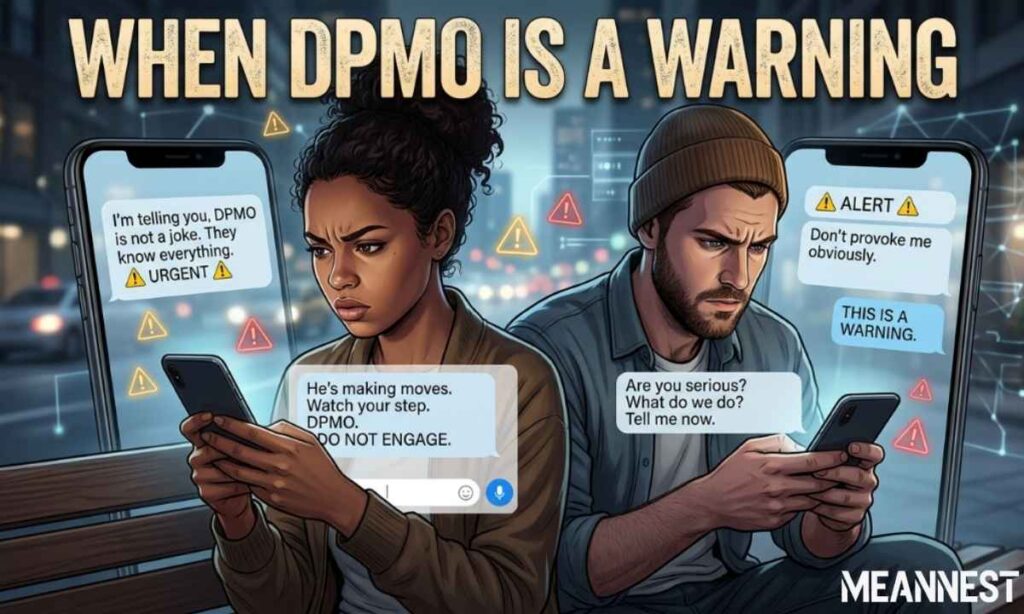
When DPMO feels like a genuine warning, it is time to slow down and take the other person’s frustration seriously.
- Acknowledge their feeling
- Apologize if needed
- Lower your tone
- Give them space
- Avoid further provocation
Treating a real warning with respect shows maturity and stops a small issue from turning into something much bigger.
If It Feels Aggressive Or Threatening
When DPMO crosses into aggressive or threatening territory, your safety and comfort come before any response.
- Do not engage
- Stay calm inside
- Set firm boundaries
- Block if necessary
- Seek outside help
No message is worth your peace of mind, and stepping away from aggression is always the strongest move you can make.
When You’re Unsure About Tone
When you genuinely cannot tell if DPMO was serious or playful, asking directly is always the safest approach.
- Ask for clarification
- Read previous messages
- Check their emoji
- Respond with care
- Do not assume intent
Taking a moment to understand the tone before reacting saves you from unnecessary misunderstandings and hurt feelings.
DPMO In Pop Culture And Music

DPMO has quietly made its way into song lyrics, social media captions, and even pop culture references as a symbol of raw unfiltered attitude.
Artists and influencers use it to project confidence and edge while connecting with audiences who speak the same digital language.
| Space | How DPMO Appears |
| Hip-Hop Lyrics | Used to express street-level frustration and assert dominance in the narrative |
| Social Media Captions | Dropped into posts to signal a bold and unbothered personal image |
| Rap Battle Culture | Thrown as a verbal warning to opponents to signal serious intent |
| Influencer Content | Used as a personality marker to appear edgy and relatable to younger audiences |
| Meme Culture | Repurposed in funny or ironic formats to poke fun at everyday irritations |
DPMO in pop culture is less about anger and more about projecting a certain kind of unapologetic confidence that resonates across generations.
Should You Use DPMO? A Quick Self-Check
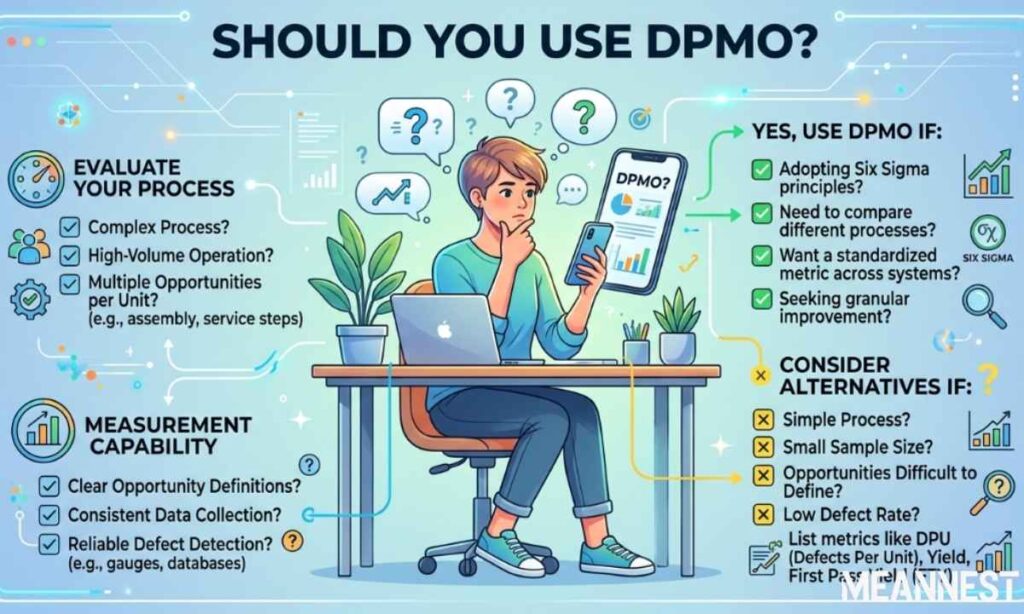
Before you hit send on DPMO, take five seconds to ask yourself if it is really the right call here.
- Ask yourself if the other person will understand it as a joke or take it seriously
- Consider whether the relationship is strong enough to handle that kind of blunt language
- Think about whether you are genuinely frustrated or just reacting out of habit
- Check if there is a calmer phrase that would express the same feeling without the risk
- Ask if sending it right now will help the situation or just add unnecessary fuel to the fire
A quick honest self-check before you send can save a good conversation from turning into an unnecessary mess.
30 Useful Examples You Can Use Instead Of DPMO
Having a ready list of alternatives to DPMO means you never have to default to harsh language when frustration hits.
- These phrases work across different situations from close friendships to professional conversations
- Each example is designed to set a clear boundary without making the other person feel attacked
- Some are calm and composed while others carry a firm edge depending on what the moment needs
- You can mix and match based on your relationship with the person and the tone of the chat
- Using these regularly will naturally sharpen how you communicate under pressure over time
Replacing DPMO with the right words shows emotional intelligence and leaves every conversation in a far better place.
Funny Light-Hearted Replies

Sometimes the best response to DPMO is one that diffuses the tension with a little well-timed humor.
- “Noted, saving that energy” works as a witty reply that shows you are unbothered and in control
- “Too late, already pissed” flips the warning back with humor without starting an actual argument
- “Sir this is a text message” is a classic funny deflection that instantly lightens the whole mood
- “Okay okay, I will behave” plays along in a playful way that signals you are not taking it seriously
- “My therapist said the same thing” adds a self-aware comic twist that usually gets a laugh out of anyone
A well-timed funny reply can turn a tense moment into a shared laugh and keep the friendship completely intact.
Assertive Yet Respectful Lines

Being assertive does not mean being aggressive, it means holding your ground while keeping your dignity fully intact.
- Set limits firmly
- Stay calm always
- Speak your truth
- Expect mutual respect
- Never apologize unnecessarily
The most powerful communicators know how to be direct and respectful at the exact same time.
Professional Responses That Maintain Authority
In professional settings, how you respond under pressure directly shapes how others perceive your authority and credibility.
- Stay composed always
- Choose words carefully
- Address issues directly
- Remain solution focused
- Command respect quietly
True professional authority is never loud, it is built through consistent calm and well-chosen words every single time.
Relationship-Saving Phrases

The right phrase at the right moment can stop a small disagreement from turning into a lasting wound.
- Acknowledge their pain
- Apologize when needed
- Choose connection first
- Soften your tone
- Rebuild trust quietly
A few honest and gentle words spoken at the right time can save something that took years to build.
Mini Case Study: DPMO Gone Wrong
Understanding DPMO is critical for organizations aiming to achieve operational excellence and maintain competitive advantage in today’s quality-driven market.
DPMO Gone Wrong
- Poor measurement, invisible
- Ignored root causes, problems
- Rushed implementation, team
- Misaligned goals, departments
- Neglected continuous, consistent
The lesson here teaches us that DPMO alone cannot guarantee success unless it’s paired with proper training, accountability, and a genuine commitment to sustainable improvement.
Quick Table: When DPMO Works vs When It Fails
| Situation | Good or Bad? | Why is |
| Regular monitoring with clear goals | Good | Ensures consistent quality tracking |
| Ignoring defects below target threshold | Bad | Creates hidden problems later |
| Team involvement in improvement process | Good | Builds ownership and accountability |
| Management sets unrealistic targets | Bad | Demoralizes staff, unrealistic expectations |
| Data-driven decisions with root cause analysis | Good | Enables sustainable continuous improvement |
| Measuring DPMO without context or standards | Bad | Creates confusion and misaligned efforts |
| Regular training and skill development | Good | Improves team capability and execution |
This table demonstrates that DPMO succeeds when organizations combine measurement with proper framework, team engagement, and realistic goals rather than viewing it as a standalone metric.
What Does DPMO Stand For?
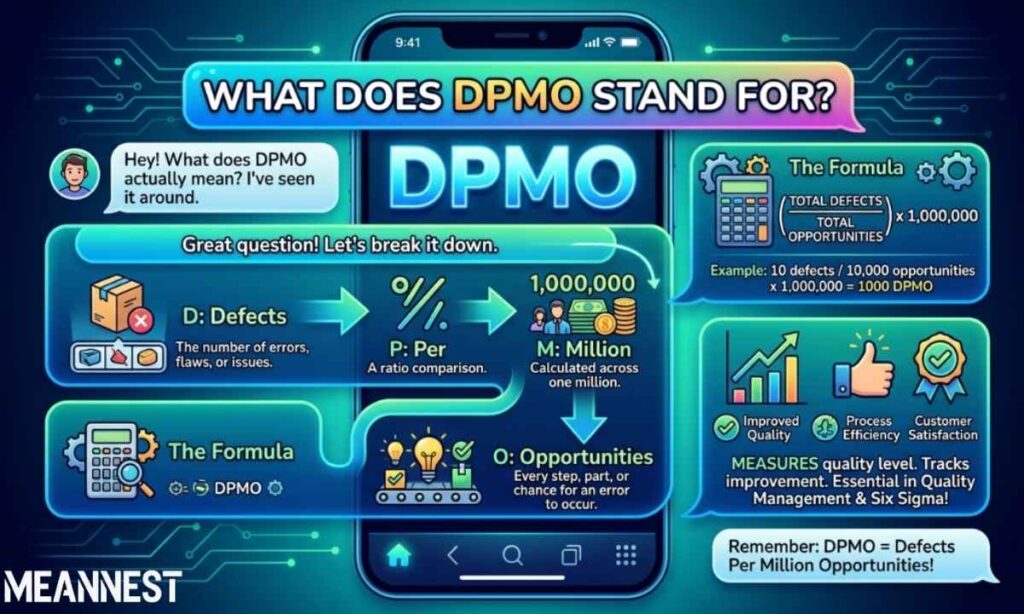
DPMO stands for Defects Per Million Opportunities, a critical quality metric used in manufacturing and service industries to measure process performance.
It represents the number of defects found in one million opportunities, providing organizations with a standardized way to evaluate how well their processes are functioning.
This metric became particularly prominent through Six Sigma initiatives, where it serves as a benchmark for operational excellence and continuous improvement.
By converting defect rates into a common scale, DPMO enables companies to compare performance across different departments, products, and time periods with absolute clarity.
What Is the Hiatus Meaning of DPMO?
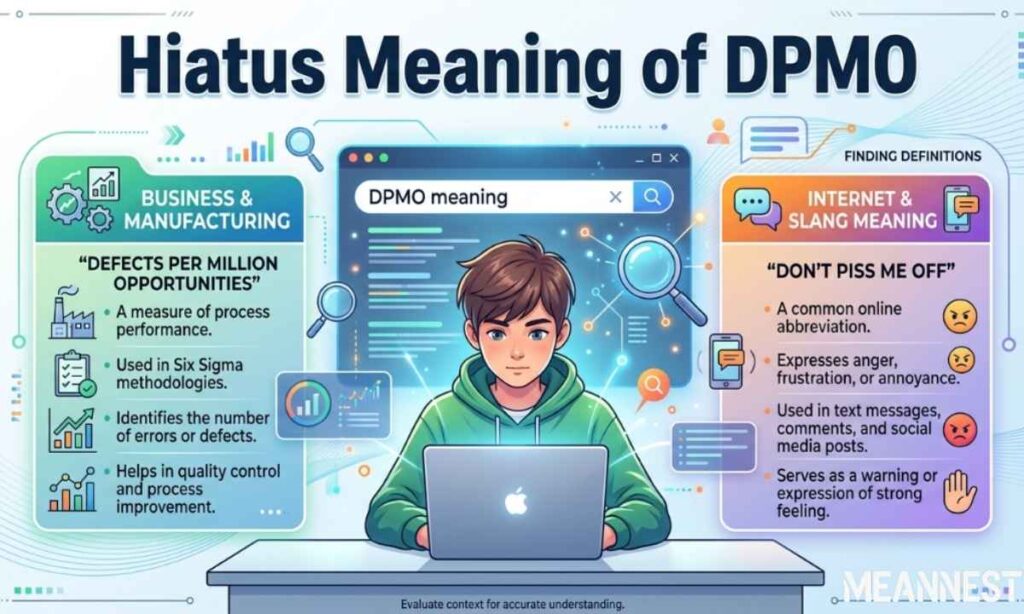
The true essence of DPMO goes far beyond just a number, representing a fundamental commitment to understanding and eliminating defects at every stage of an organization’s operations.
- Defects = actual errors discovered in products
- Per Million = standardized measurement scale
- Opportunities = all chances for something to go wrong
- Process Health = overall quality and reliability indicator
- Improvement Driver = catalyst for continuous excellence
Understanding DPMO means recognizing that this metric is not merely a scorecard, but rather a strategic tool that empowers organizations to achieve exceptional performance and customer satisfaction.
When Should You Avoid Using DPMO?
While DPMO is a powerful metric, there are specific scenarios where applying it may prove counterproductive or simply not suitable for organizational goals.
- One-off projects lack meaningful measurement opportunities
- Service industries struggle to define consistent opportunities
- Innovation phases require flexibility, not rigid metrics
- Startup environments need speed over perfect quality tracking
- Low-volume processes produce insufficient data for accuracy
It’s crucial to recognize that DPMO works best in high-volume, repetitive processes where defect patterns are consistent and measurable, so forcing it into inappropriate contexts will only create confusion and wasted resources.
Better Alternatives to DPMO (Based on Tone & Context)
Organizations often find that alternative metrics align better with their specific culture, industry type, and strategic objectives than relying solely on traditional DPMO measurements.
- Cycle Time measures how fast processes complete work
- Customer Satisfaction Score reflects real user experience outcomes
- First Pass Yield shows quality without rework requirements
- Cost of Quality reveals financial impact of defects clearly
- Process Capability Index indicates inherent process performance potential
The key is selecting metrics that genuinely resonate with your organization’s values and goals, rather than forcing a one-size-fits-all approach that may not capture what truly matters to your business.
Why Choosing the Right Alternative Matters

Selecting the appropriate metric for your organization ensures that your quality efforts align with real business objectives and create meaningful change.
When you choose metrics that resonate with your culture and industry context, teams become more engaged and motivated to drive continuous improvement rather than feeling forced to meet arbitrary standards.
The wrong metric can lead to counterproductive behavior, encouraging teams to optimize for numbers rather than genuine quality and customer value.
By thoughtfully selecting alternatives like Cycle Time, Customer Satisfaction, or First Pass Yield, you create a sustainable foundation for excellence that drives both organizational success and employee fulfillment.
The Psychology Behind DPMO: Why People Use It
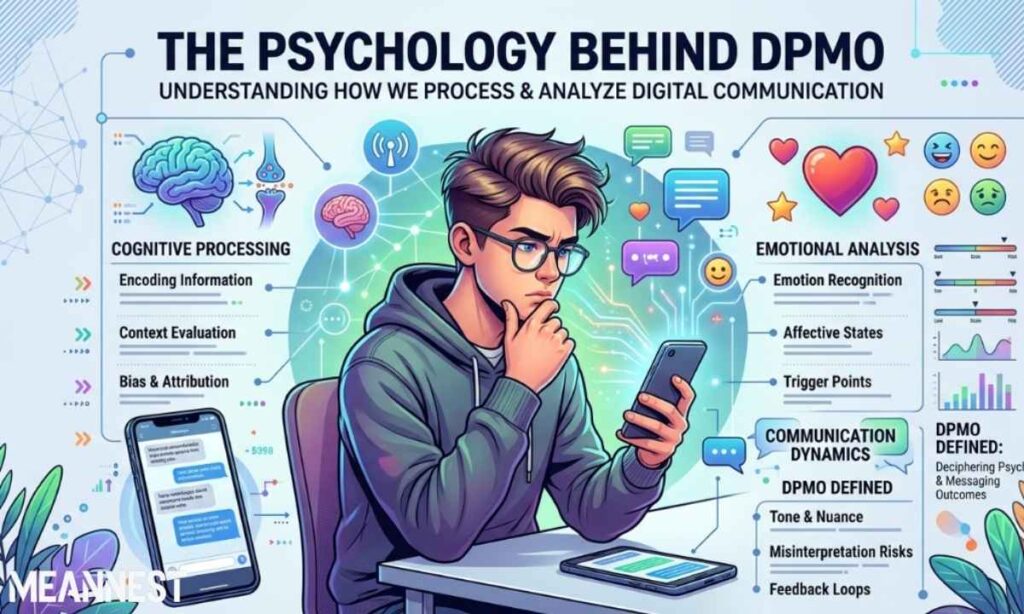
DPMO appeals to organizations because it offers quantifiable precision and a sense of control in complex operations where unpredictability feels threatening.
The metric’s universal scale provides psychological comfort, allowing leaders to compare themselves against industry benchmarks and feel they’re measuring up to established standards in a measurable and objective way.
Humans are naturally drawn to numbers and rankings because they simplify complex realities into something easy to understand and communicate across organizations.
DPMO satisfies this psychological need for clarity and progress tracking, even when the metric itself may not capture the full picture of quality or customer satisfaction in a meaningful way.
DPMO in Pop Culture and Music
While DPMO rarely appears directly in mainstream entertainment, the pursuit of perfect quality and zero defects that the metric represents echoes throughout the creative industries.
- Recording studios obsess over sound precision details
- Concert tours demand flawless execution every night
- Film production requires multiple takes for perfection
- Music festivals aim for seamless artist transitions always
- Streaming platforms maintain uptime for user experience
The spirit of DPMO striving for excellence and eliminating mistakes resonates deeply with artists, musicians, and producers who understand that quality and precision are what separate memorable performances from forgettable ones in the eyes of passionate audiences.
DPMO Meaning Explained in Everyday Talk
Breaking down DPMO into simple terms means understanding that it’s just a smart way to count how many times things mess up when you’re scaling operations to massive numbers.
- Imagine a bakery making one million cookies
- Count how many come out burnt or broken
- That number is your defect percentage basically
- Lower count means your bakery is doing well
- Higher count shows you need to improve processes
So when someone talks about DPMO, they’re really saying: “Out of everything we make or do, how many times do we actually mess it up?” and the smaller that number, the better your whole operation is performing.
What Does DPMO Stand For Online?
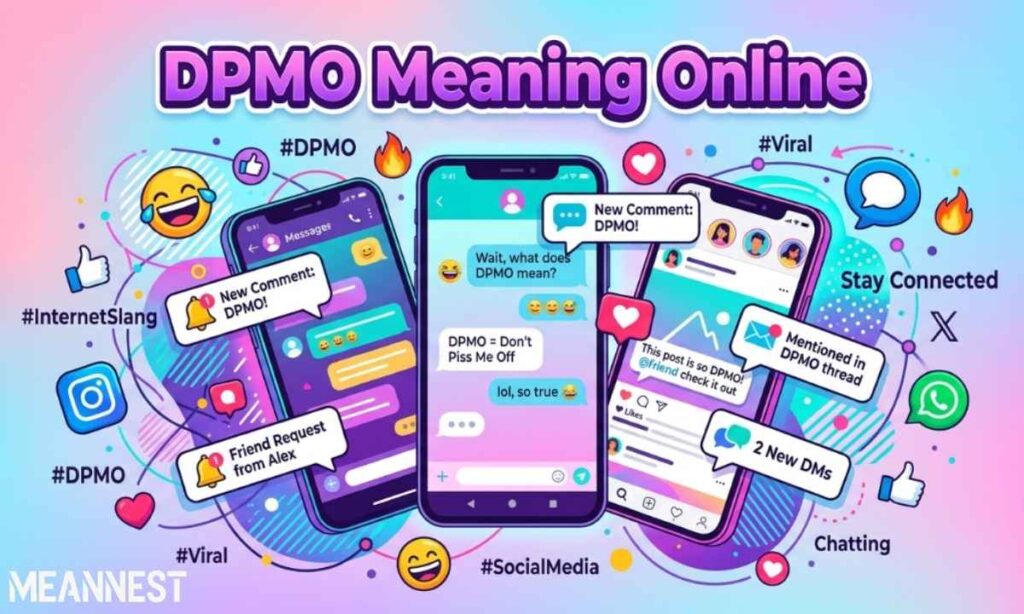
In the digital world, DPMO takes on even greater importance because customers expect near-perfect experiences every single time they interact with your platform or service online.
- Website downtime counts as defects severely
- Loading delays frustrate users and hurt rankings
- Broken links damage user trust immediately
- Payment errors create serious customer dissatisfaction
- Data security breaches represent critical failures
For online businesses, achieving low DPMO means delivering seamless experiences where users rarely encounter problems, glitches, or frustrations because in the digital realm, competition is just one click away and customer patience is always running thin.
When to Avoid Using DPMO
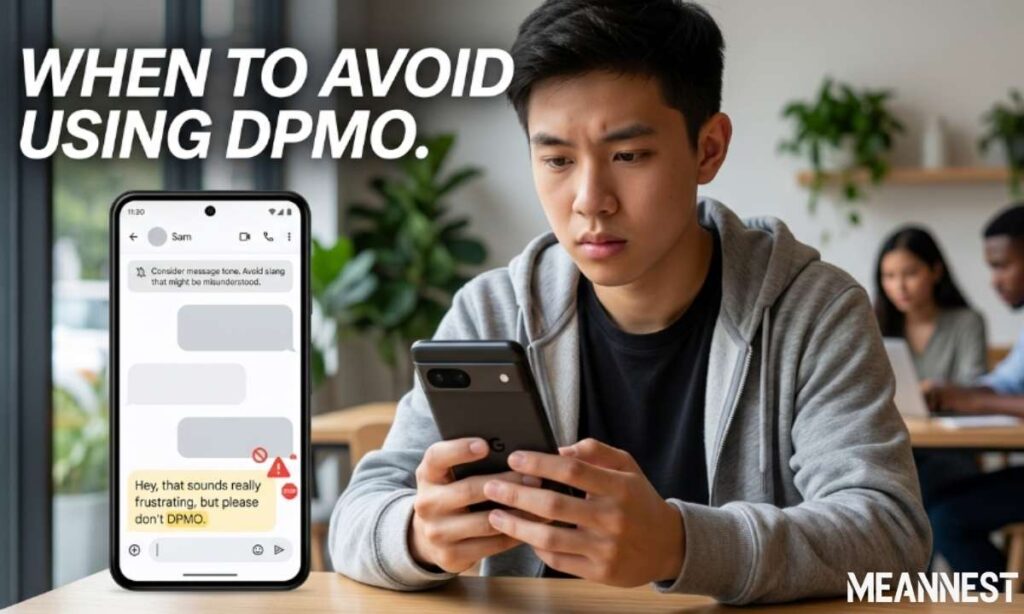
DPMO becomes problematic in environments where defining defects is impossible or where measurement itself creates more harm than insight.
Creative industries, research organizations, and innovation-driven teams often find that forcing DPMO metrics onto their work actually stifles the very excellence they’re trying to achieve because it creates rigid constraints on exploration and experimentation.
Additionally, small-scale operations and one-of-a-kind projects lack the volume of data needed to make DPMO meaningful, while service industries struggle because defects are subjective and context-dependent.
In these scenarios, choosing alternative metrics that capture quality, satisfaction, and performance in ways that actually matter to your business will always be smarter than forcing a square peg into a round hole with DPMO.
Emotional Alternatives to DPMO
Beyond cold numbers and metrics, organizations are discovering that emotional intelligence and human-centered approaches can drive quality far more effectively than obsessing over defect rates and numerical targets.
- Employee satisfaction reflects genuine engagement levels
- Customer joy scores measure real emotional responses
- Team morale indicators show sustainable motivation health
- Trust metrics capture relationship quality and loyalty
- Well-being assessments prioritize human welfare first
The shift toward emotional alternatives represents a maturity in how we think about quality recognizing that sustainable excellence comes from teams that feel valued, empowered, and genuinely connected to their work rather than teams constantly chasing numerical benchmarks.
Learning How to Use DPMO Correctly
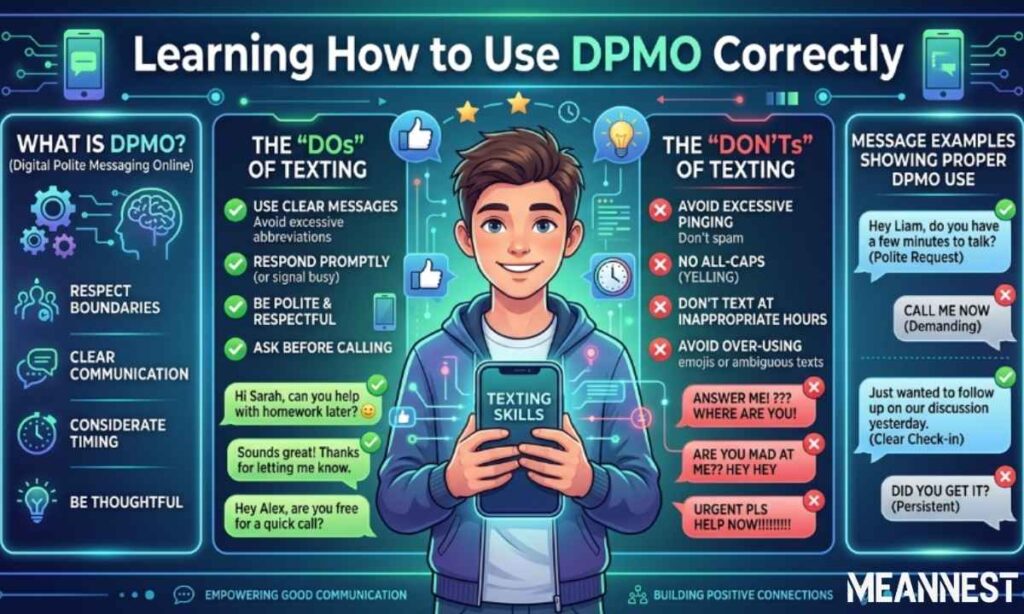
Using DPMO effectively requires understanding that it’s not a destination or goal in itself, but rather a diagnostic tool that reveals where your processes need improvement, alongside proper training, context, and realistic expectations from leadership.
The real mastery comes when organizations balance DPMO with emotional intelligence, team engagement, and customer insights recognizing that true excellence emerges from combining data-driven decisions with human wisdom and a genuine commitment to sustainable, meaningful quality that actually matters to the people you serve.
Frequently Asked Question
What Does DPMO Mean in Texting?
DPMO means “Don’t Piss Me Off.” It is used to show anger or frustration in chats.
What Does DPMO Stand For?
DPMO stands for “Don’t Piss Me Off,” a slang phrase used online.
What Does DPMO Mean on Snapchat?
On Snapchat, DPMO still means getting annoyed or warning someone to stop.
Is DPMO a rude word?
Yes, it can sound rude because it shows anger or irritation.
When do people use DPMO?
People use DPMO when they are upset or warning someone in a chat.
Is DPMO used in formal chat?
No, DPMO is informal and only used in casual texting or social media.
What does DPMO mean in social media?
It usually means someone is annoyed or asking others not to bother them.
Can DPMO be funny?
Sometimes friends use it jokingly, but tone matters a lot.
Is DPMO common in 2025?
Yes, it is still used in texting and online conversations in 2025.
How should I reply to DPMO?
Reply calmly or give space if the person sounds upset or angry.
Conclusion
Confused by internet slang? What Does DPMO Mean? Texting Guide for 2025 gives you the answer in a simple way. Knowing the meaning of DPMO helps you understand messages better and avoid awkward misunderstandings. It is a useful term to recognize if you spend time texting or using social media.
Texting trends change quickly, but learning common slang keeps you up to date. DPMO is often used to show annoyance or frustration in a conversation. Use it carefully and always consider your audience. The more slang you understand, the easier online communication becomes.

Michael is a creative writer with 4 years of experience exploring meanings and clever puns through his blog. He now works at Meannest.com, where he continues crafting engaging, witty content that connects ideas, language, and humor for readers worldwide diverse.
