

Have you ever looked at a painting and noticed the simple lines that shape the whole artwork? Understanding Outline Meaning in Art can help you see how artists create clear forms, depth, and visual balance. Outlines are one of the most basic yet powerful tools used in drawing and painting.
The Outline Meaning in Art refers to the outer edges or boundaries that define an object’s shape. Artists use outlines to make subjects stand out and guide the viewer’s attention. From simple sketches to detailed masterpieces, outlines play an important role in creating strong and recognizable artwork.
Definition of Outline in Art
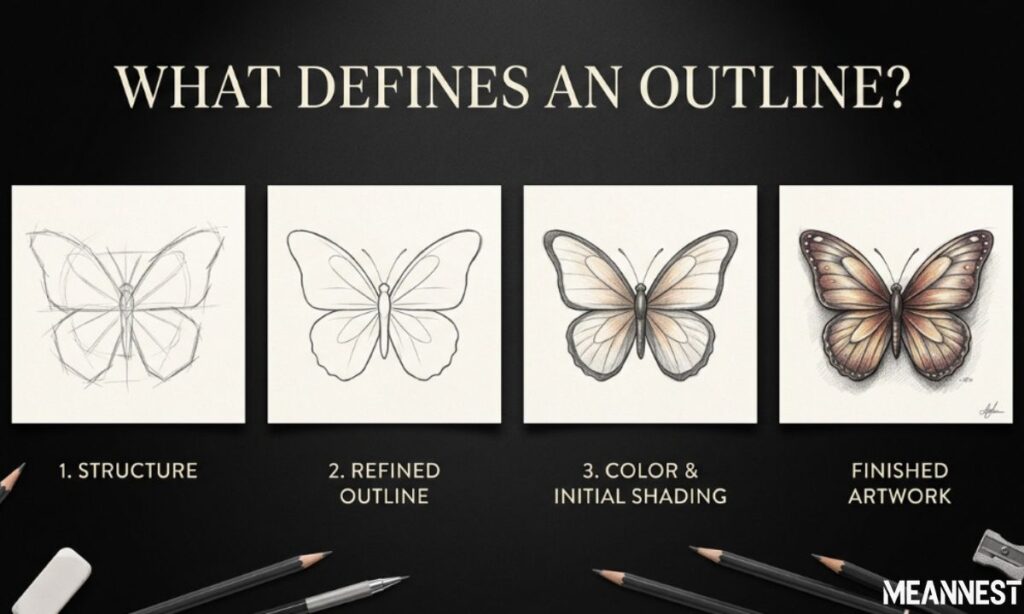
An outline is the visible edge or boundary line that defines the shape of an object in a drawing. It separates a form from its background and gives the eye a clear path to follow.
- Marks the outer edge of a shape
- Creates clear separation from background
- Helps define form before shading
- Used in sketching and comics
- Guides the viewer’s eye across the image
Outlines give structure to art before details are added.
Origin and History of Outline in Art
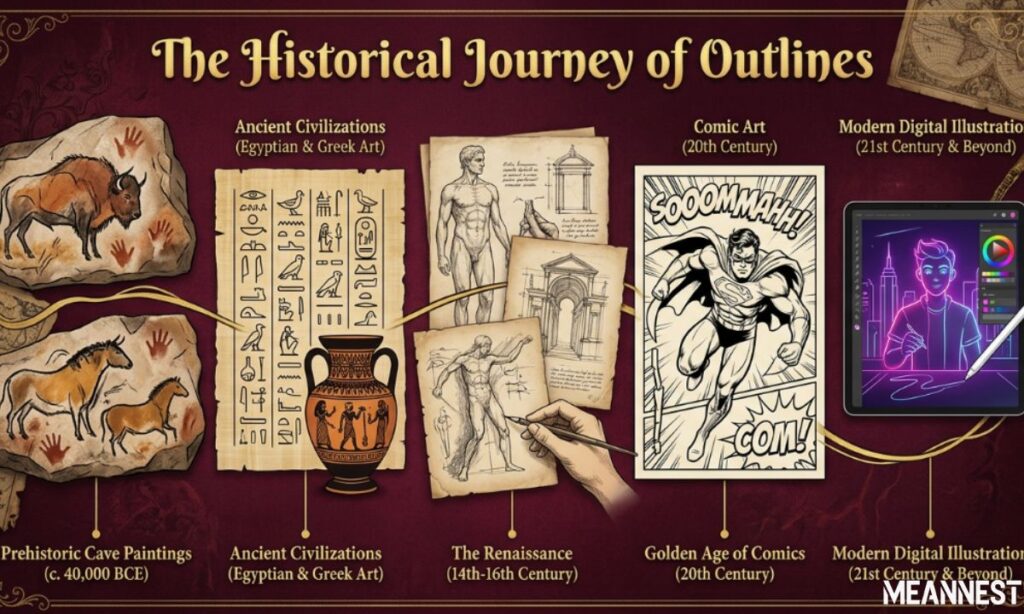
The use of outline dates back to prehistoric times, when early humans drew simple edges on cave walls. Over centuries, artists across cultures refined this technique into a key part of visual storytelling.
- Found in cave paintings worldwide
- Used in ancient Egyptian art
- Common in Greek pottery designs
- Developed further in medieval manuscripts
- Still vital in modern illustration
Outline has remained a timeless tool throughout art history.
Types of Outlines in Art
Artists use different kinds of outlines to express mood, depth, and style in their work. Each type serves a unique purpose in shaping how a drawing or painting is perceived.
| Type | Description | Example |
| Contour Outline | Follows the natural edge of a form | Sketch of a human face |
| Bold Outline | Thick, strong line for emphasis | Comic book characters |
| Thin Outline | Light, delicate line for subtlety | Botanical illustrations |
| Broken Outline | Uses gaps for a soft, natural look | Loose pencil sketches |
| Geometric Outline | Straight, precise lines for structure | Architectural drawings |
| Expressive Outline | Loose, energetic lines showing emotion | Gesture drawings |
| Decorative Outline | Stylized lines used for design | Mandala or pattern art |
Real-Life Examples of Outlines (With Short Dialogues)
Outlines appear all around us, from comics to sketches, helping shapes stand out clearly. Even simple conversations show how people notice and describe these edges in daily life.
- “Look at the bold outline on that comic hero!”
- “This sketch needs a clearer edge line.”
- “I love how the map borders are outlined.”
- “Trace the shape before adding color.”
- “The logo design has a clean outline.”
Outlines make everyday visuals easier to understand and enjoy.
Personality Traits / Usage Context
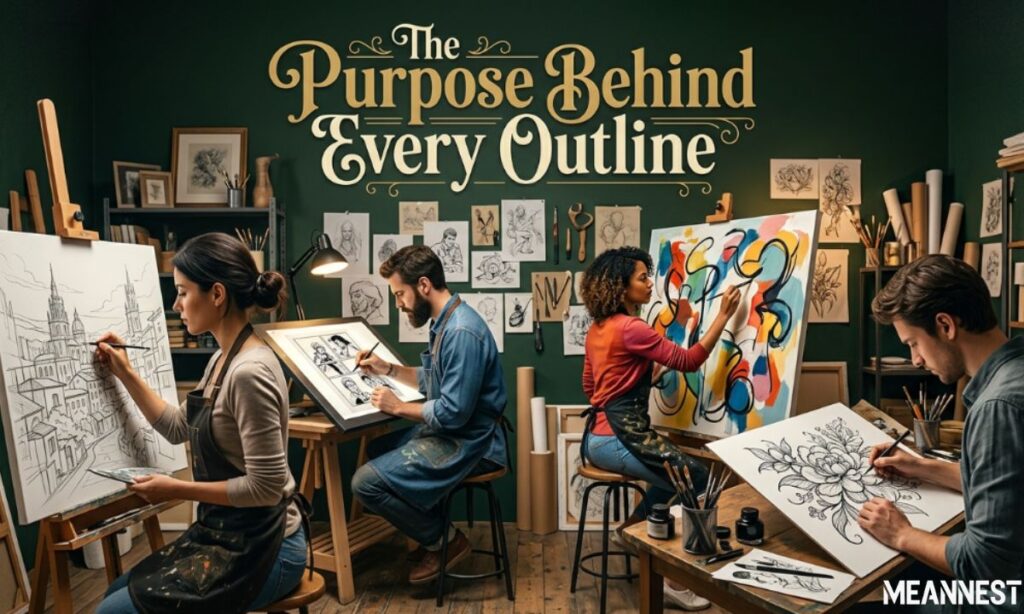
The style of an outline often reflects the personality of the artist and the purpose behind the drawing.
- Bold lines suggest confidence and strength
- Thin lines show delicacy and calmness
- Sketchy outlines reflect a creative, casual mood
- Precise lines indicate focus and discipline
- Decorative outlines express artistic playfulness
Outline style often mirrors the artist’s mindset and intent.
Common Mistakes or Misconceptions
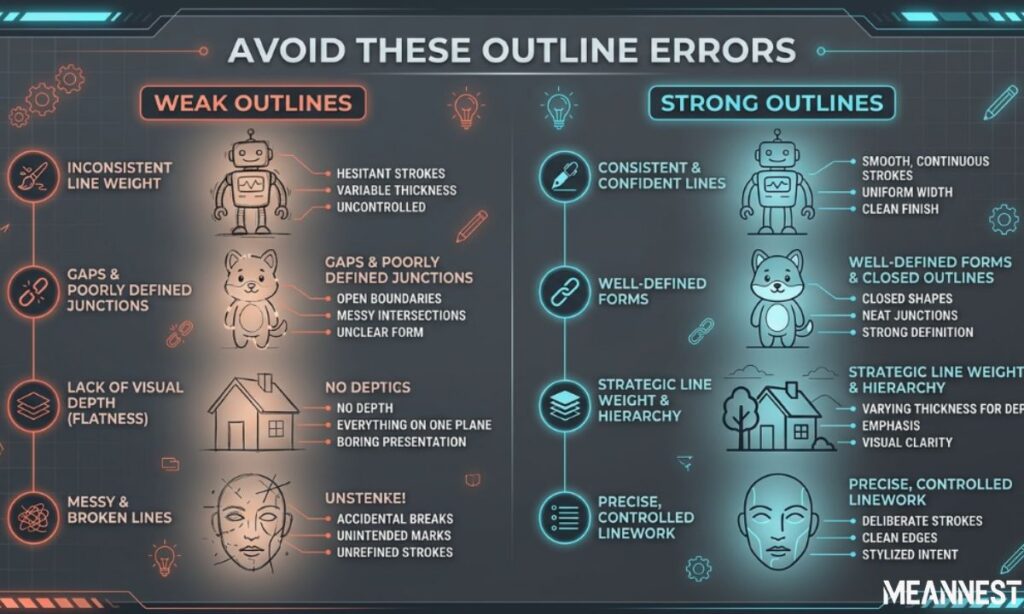
Many beginners think an outline must always be a thick, solid line around an object. In reality, outlines can be soft, broken, or even implied depending on the style.
- Thinking outlines are always bold
- Believing outline equals contour
- Ignoring negative space while outlining
- Using one line weight for everything
- Skipping outlines in digital art
A good outline adapts to the subject, not the other way around.
Pencil outline sketch
A pencil outline is the first light layer of lines an artist draws to define a subject’s shape. It acts as a guide before adding shading or color.
- Uses light pressure for easy erasing
- Helps map out proportions
- Common in portrait practice
- Often refined into a final sketch
- Great for beginners learning structure
Pencil outlines build the foundation for almost every drawing.
Bold outlines in art
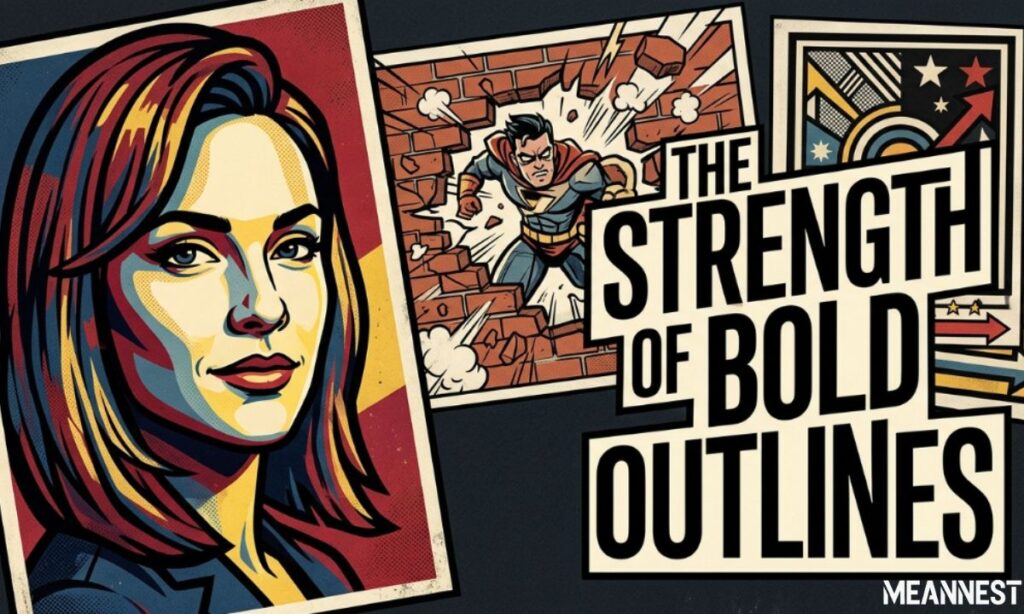
A bold outline uses thick, dark lines to make a subject stand out strongly. It’s a popular choice in styles that need high visual impact.
- Common in comic books
- Used in pop art illustrations
- Creates strong contrast
- Works well with flat colors
- Often seen in logo design
Bold outlines grab attention instantly and define a clear style.
Modern & Relatable Examples (Updated for 2026)
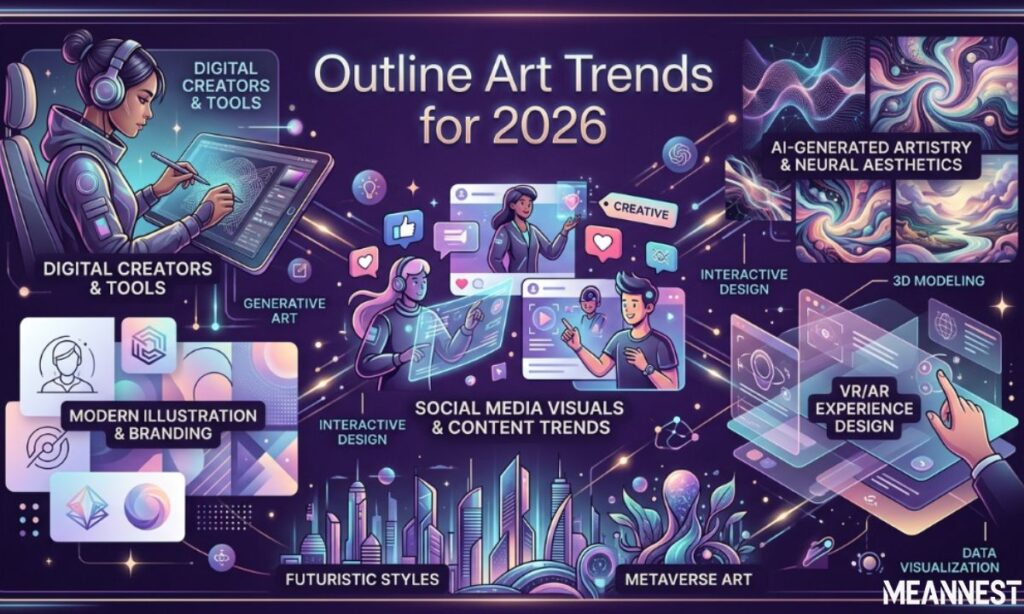
In 2026, outlines are widely used in digital art, app icons, and animated content. Artists now blend traditional outlining with AI-assisted tools for faster results.
- Seen in mobile app icons
- Used in NFT-style artwork
- Common in animated stickers
- Found in AI-generated illustrations
- Popular in minimalist branding
Outlines continue evolving alongside new digital art trends.
Tips for Using Outlines Effectively
Using outlines well means knowing when to make them thick, thin, or invisible. The right balance brings clarity without overpowering the artwork.
- Vary line weight for depth
- Keep outlines consistent in style
- Use reference images for accuracy
- Avoid over-outlining small details
- Practice with simple shapes first
Effective outlining comes from practice and careful observation.
Shape boundaries in drawing
A shape boundary marks where one form ends and another begins in a drawing. It helps separate objects clearly within a composition.
- Defines edges of shapes
- Separates foreground and background
- Helps maintain proportion
- Useful in geometric drawing
- Supports clean layering
Clear shape boundaries make compositions easier to read.
Graphic design outlines
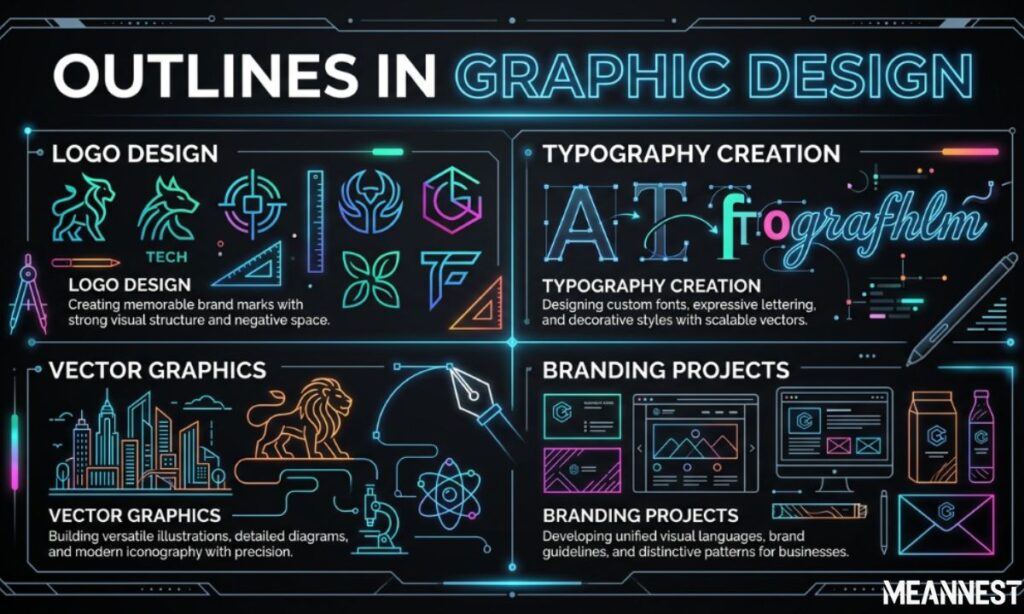
In graphic design, outlines are used to create clean, scalable shapes for logos, icons, and layouts. They ensure visuals stay sharp across different sizes.
- Used in vector illustrations
- Common in icon design
- Helps with brand consistency
- Works well in UI elements
- Scales easily without losing quality
Outlines give graphic designs a clean, professional finish.
In Texting and Messaging (Art Context Slang Use)

When chatting about art, people often use casual terms like “outline it” to mean sketch the basic shape first. It’s a quick way to describe early drawing steps.
- “Just outline it first”
- “Send me the rough sketch“
- “Add an outline before color”
- “Clean up those lines“
- “That art outline looks great”
Texting about art often simplifies technical terms into casual phrases.
Difference between outline and contour
An outline is the overall edge of a shape, while a contour follows the surface details and curves within that shape. Both work together to build realistic forms.
- Outline shows overall shape
- Contour shows inner detail
- Outline is usually flat
- Contour follows 3D form
- Both used in figure drawing
Understanding this difference improves accuracy in realistic art.
Thick and thin outlines
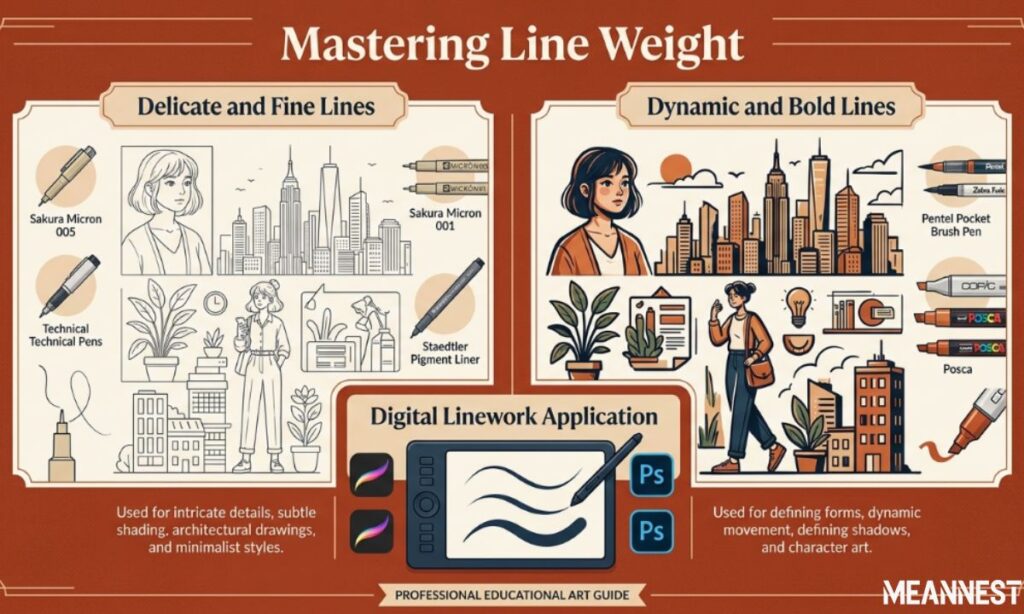
Artists use thick and thin outlines together to show depth and focus. Thicker lines often highlight the main subject, while thinner ones add subtle detail.
- Thick lines show emphasis
- Thin lines show subtlety
- Mixing both adds depth
- Common in manga art
- Helps guide the viewer’s focus
Combining line weights creates more dynamic illustrations.
Basic drawing skills
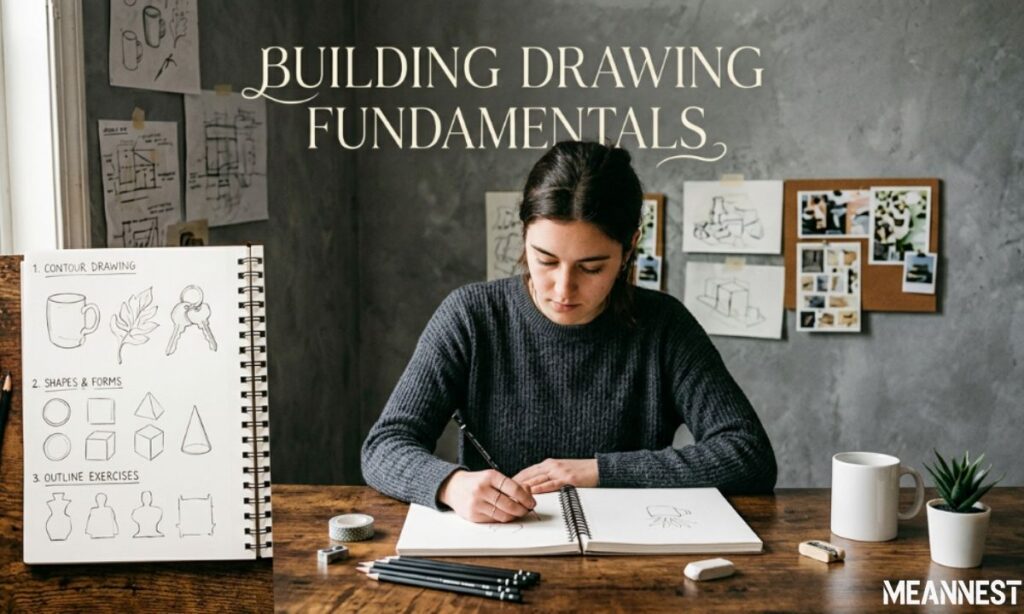
Strong outlining ability comes from mastering basic drawing skills like observation, proportion, and control. These fundamentals support every other artistic technique.
- Practice hand control
- Study basic shapes
- Learn proportion rules
- Improve observation skills
- Repeat with daily sketching
Solid fundamentals make outlining and all art easier over time.
Digital illustration outlines
In digital illustration, outlines are often created using tablets and software with adjustable line weight and pressure sensitivity. This gives artists more control than traditional tools.
- Made using drawing tablets
- Adjustable line thickness
- Often done on a separate layer
- Common in vector software
- Easy to edit or undo
Digital tools make outlining faster and more flexible.
How to improve outlines
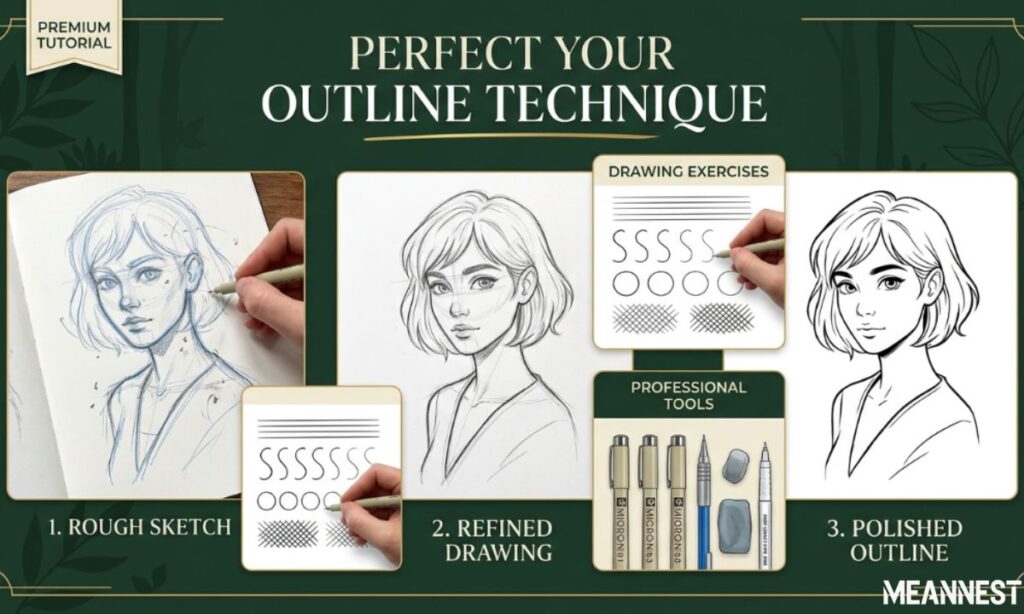
Improving outline quality takes consistent practice and attention to line control. Small adjustments in technique can greatly enhance overall artwork.
- Practice steady hand movement
- Study reference photos
- Use light sketching first
- Try different pen sizes
- Review and revise often
Improvement comes from regular practice and honest self-review.
Implied outline in art
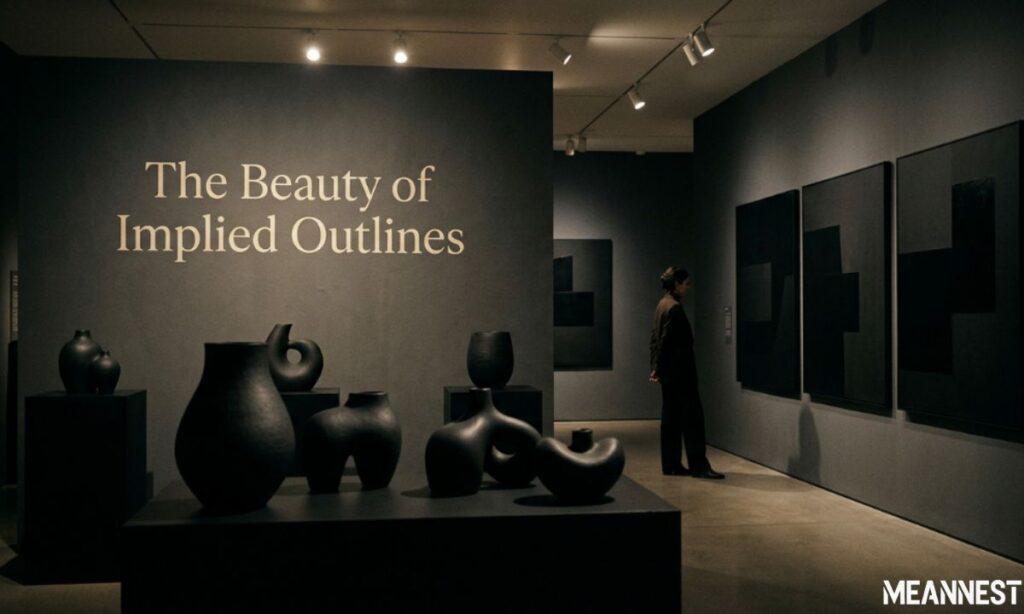
An implied outline suggests a shape’s edge without drawing a continuous line. It’s often created through shading, color contrast, or spacing.
- Created using light and shadow
- Common in realistic painting
- Relies on value contrast
- Often seen in oil paintings
- Requires strong observation skills
Implied outlines create natural, lifelike forms without harsh lines.
In Love and Relationships (Symbolic Meaning)
In symbolic terms, an outline can represent the early structure of a relationship before deeper connection forms. It reflects the basic shape before details are added.
- Represents early connection
- Symbolizes boundaries in love
- Shows the foundation of trust
- Reflects growth over time
- Mirrors building emotional depth
Like art, relationships often start with a simple outline before becoming whole.
In Slang and Casual Language
Casually, “outline” can mean giving a quick summary or basic plan before going into detail. It’s used beyond art in everyday conversations.
- “Give me a quick outline“
- “Just the basic plan, please”
- “Here’s the rough idea“
- “Outline it before we finalize“
- “Keep the summary short”
In casual speech, “outline” often means a simple starting point.
On Social Media Platforms
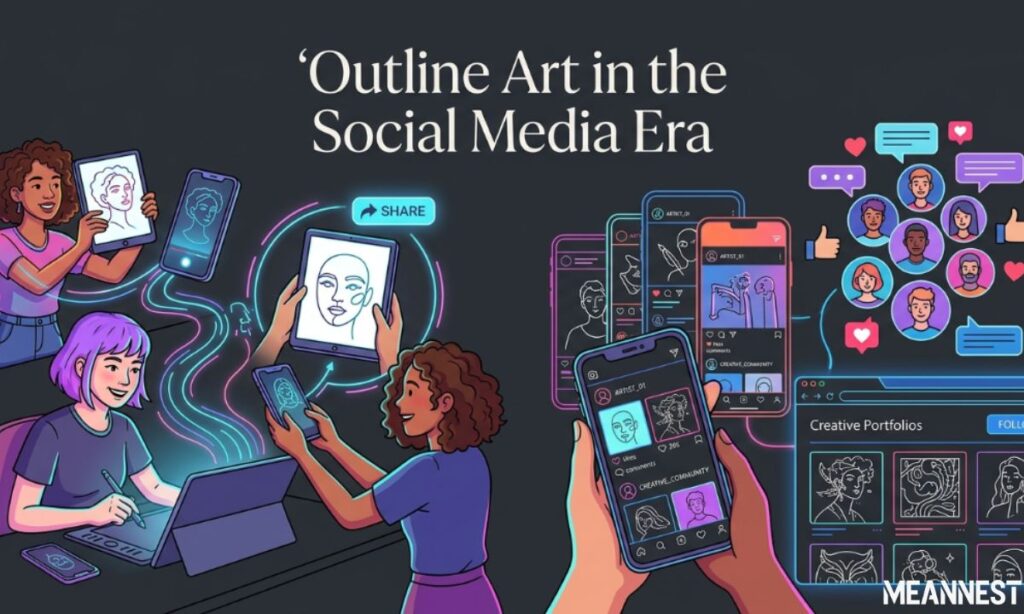
On platforms like Instagram and TikTok, artists often share outline tutorials and time-lapse sketches to grow their audience. Outline content is popular for its simplicity.
- Common in art tutorials
- Used in time-lapse videos
- Popular under #sketch tags
- Shared in digital art reels
- Helps beginners learn techniques
Social media has made outline-based content widely accessible.
Spiritual or Symbolic Meaning
Spiritually, an outline can symbolize the soul’s framework, representing structure before deeper meaning is filled in. It suggests potential waiting to be developed.
- Symbolizes inner structure
- Represents unfinished potential
- Reflects personal growth stages
- Suggests clarity of purpose
- Mirrors spiritual foundations
An outline often symbolizes the beginning of deeper transformation.
Numerology or Cultural Meaning
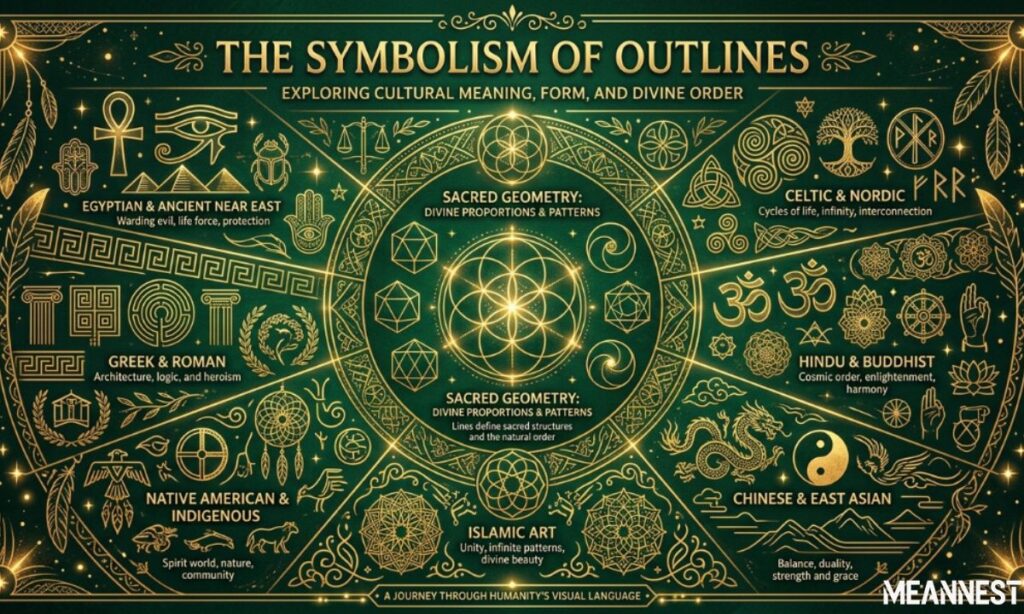
In some cultural views, outlines represent order and definition, often linked to structure and discipline. Numerologically, they may symbolize the number one, representing beginnings.
- Linked to the number one
- Symbolizes new beginnings
- Represents order and clarity
- Found in traditional symbolism
- Reflects discipline in design
Cultural meanings often connect outlines to structure and fresh starts.
Examples & Usage in Art
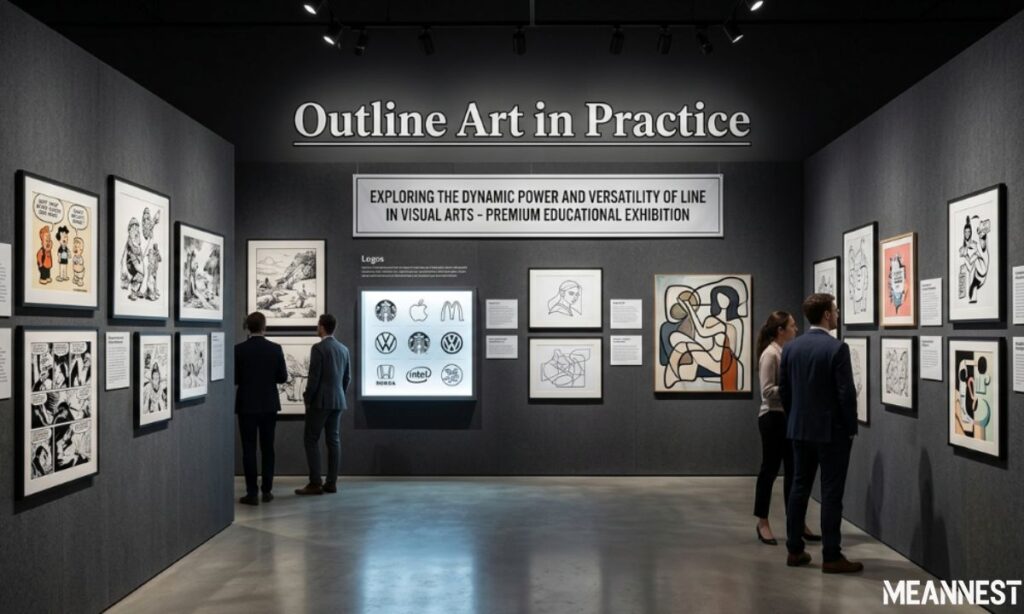
Outlines appear across many art forms, from comics to fine art, each using them differently to define shape and style. Their usage varies based on purpose and medium.
- Used in comic illustrations
- Common in architectural sketches
- Found in children’s books
- Applied in tattoo design
- Seen in fashion illustration
Outlines remain a versatile tool across countless art forms.
Frequently Asked Question
What is the outline meaning in art?
In art, an outline is a line that defines the outer edge or shape of an object. It helps viewers recognize forms clearly.
Why is an outline important in art?
An outline gives structure and makes subjects stand out. It helps artists create clear and organized compositions.
How do artists use outlines in drawings?
Artists use outlines to sketch the basic shape of objects before adding details, shading, and color.
What is an example of an outline in art?
A simple drawing of a flower with lines around each petal is a common example of an outline in art.
Are outlines used in all art styles?
No, some art styles rely heavily on outlines, while others use color, light, and shading to define shapes.
What is the difference between an outline and a contour line?
An outline shows the outer edge of a subject, while contour lines can also show inner details and surface forms.
Can a painting have outlines?
Yes, many paintings use outlines to separate objects, emphasize shapes, and create visual focus.
Do beginners need to learn outlines in art?
Yes, learning outlines helps beginners understand shapes, proportions, and basic drawing techniques.
How do outlines improve artwork?
Outlines make artwork clearer and easier to understand. They help guide the viewer’s eye through the composition.
What are the uses of outlines in art?
Outlines are used to define shapes, create contrast, organize compositions, and improve visual communication.
Conclusion
Outline Meaning in Art is an important concept that helps artists create clear and recognizable shapes. It may seem simple, but outlines play a big role in making artwork easy to understand. Learning about outlines can improve both drawing skills and art appreciation.
In the end, understanding Outline Meaning in Art helps you see how artists build structure and visual interest in their work. From beginner sketches to professional paintings, outlines remain a valuable artistic tool. They continue to shape the way art is created and viewed around the world.

Michael is a creative writer with 4 years of experience exploring meanings and clever puns through his blog. He now works at Meannest.com, where he continues crafting engaging, witty content that connects ideas, language, and humor for readers worldwide diverse.

1 thought on “Outline Meaning in Art: Definition, Examples & Uses”